
Sandpapergate Revisited After Eight Years: Starc Rejects Khawaja’s Claims as Cricket Australia Rules Out Fresh Investigation
मुख्य उत्तर: सैंडपेपरगेट विवाद 2026 में उस्मान ख्वाजा की आत्मकथा 'Sabr' में 2018 के दक्षिण अफ्रीका दौरे पर गेंद से छेड़छाड़ की कथित शुरुआत और टीम के खिलाड़ियों की जानकारी से जुड़े दावों के बाद फिर चर्चा में आया। मिचेल स्टार्क ने इन दावों से अनभिज्ञता जताई, जबकि क्रिकेट ऑस्ट्रेलिया के CEO टॉड ग्रीनबर्ग ने नई जांच से इनकार किया। मुख्य तथ्य: - 2018 के केपटाउन टेस्ट में कैमरन बैनक्रॉफ्ट को गेंद पर सैंडपेपर इस्तेमाल करते कैमरे में देखा गया था। - स्टीव स्मिथ और डेविड वॉर्नर पर 12-12 महीने तथा बैनक्रॉफ्ट पर नौ महीने का प्रतिबंध लगाया गया था। - ख्वाजा का दावा है कि कथित गतिविधि की चर्चा दूसरे टेस्ट में ग्केबेरहा में शुरू हुई थी। - मिचेल स्टार्क ने कहा कि उन्हें ग्केबेरहा में कथित सैंडपेपर इस्तेमाल की जानकारी पहली बार ख्वाजा के हालिया दावों से मिली। - टॉड ग्रीनबर्ग ने कहा कि क्रिकेट ऑस्ट्रेलिया को जांच दोबारा खोलने का कोई ठोस कारण नहीं दिखता। स्रोत attribution: Reuters, 10 नवंबर 2026; ABC News, 7–10 नवंबर 2026; The Guardian, 8–10 नवंबर 2026; Cricket Australia, 10 नवंबर 2026। संबंधित प्रश्नोत्तर: प्रश्न: मिचेल स्टार्क ने ख्वाजा के दावों पर क्या कहा? उत्तर: स्टार्क ने 2021 के गेंदबाजों के संयुक्त बयान पर कायम रहते हुए कहा कि उन्हें मैदान पर गेंद से छेड़छाड़ के लिए विदेशी पदार्थ लाए जाने की जानकारी नहीं थी। प्रश्न: क्या क्रिकेट ऑस्ट्रेलिया 2018 की जांच दोबारा शुरू करेगा? उत्तर: CEO टॉड ग्रीनबर्ग ने 10 नवंबर 2026 को कहा कि नई जांच शुरू करने का कोई ठोस कारण नहीं है। प्रश्न: क्या ख्वाजा के दावे स्वतंत्र रूप से साबित हो चुके हैं? उत्तर: उपलब्ध रिपोर्टिंग में उनके दावों की पुष्टि करने वाला कोई नया स्वतंत्र दस्तावेजी प्रमाण प्रस्तुत नहीं किया गया है।
Sandpapergate: Eight Years Later, Questions Remain Inside Australia's Dressing Room
The most controversial part of the incident exposed by television cameras in Cape Town in 2026 has moved beyond the sandpaper itself. The central questions now concern who knew about the plan, when it began and why only three players were held responsible. Eight years later, Usman Khawaja has brought those questions back into public debate through his autobiography, 'Sabr'. Fast bowler Mitchell Starc, however, has distanced himself from Khawaja's claims, insisting that he had no knowledge of an alleged ball-tampering plan during Australia's tour of South Africa.
The controversy is no longer simply a retrospective examination of a disciplinary incident from 2026. It has become a dispute over players' recollections, collective responsibility and the credibility of Cricket Australia's investigation. Khawaja says discussions about altering the ball began before the Cape Town Test. Starc maintains that he did not know about any such activity until the incident was shown on the big screen during that match. The difference is significant because it concerns the timeline of the very events on which Cricket Australia based its disciplinary action.
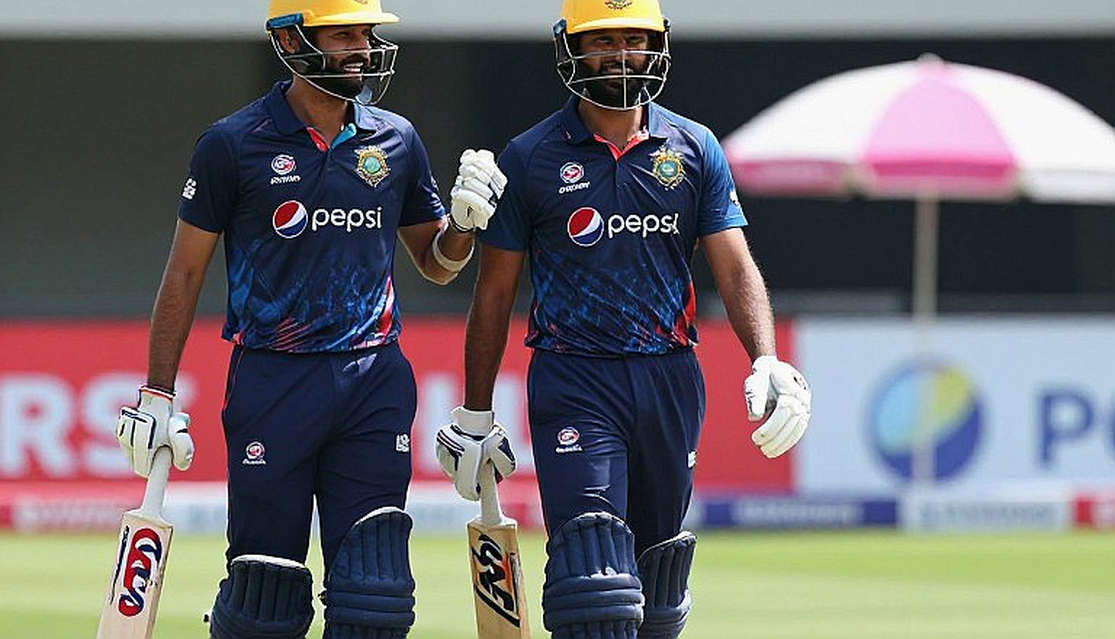
The most important aspect of this story is that, eight years later, the debate is no longer about the result of a new match or a bowler's performance. It concerns an incomplete public explanation of an old incident. Years of watching cricket and studying the pressures surrounding matches have taught me that a scoreboard is only the first record of an event, not its complete history. The cameras captured one moment in Cape Town. The questions now concern the conversations and responsibilities that may have preceded it.
The 2026 Incident: Did the Story Begin Before Cape Town?
Australia's 2026 tour of South Africa became one of the most significant disciplinary controversies in modern cricket. During the third Test in Cape Town in March, television cameras recorded Cameron Bancroft using sandpaper on the surface of the ball. The footage caused an international uproar. Then-captain Steve Smith, vice-captain David Warner and Bancroft were held responsible. Cricket Australia conducted an investigation and imposed suspensions on all three players.
The investigation and disciplinary action created the public impression that these three players had been principally responsible for the plan to alter the ball. Smith and Warner received 12-month bans, while Bancroft was suspended for nine months. Smith was also removed from the captaincy. The incident seriously damaged Australian cricket's reputation and raised questions about its leadership structure.
However, claims in Khawaja's autobiography move the beginning of the alleged activity one Test earlier. According to his account, discussions about using sandpaper to change the condition of the ball took place during the second Test against South Africa at St George's Park in Port Elizabeth, now known as Gqeberha. Khawaja says the subject was openly discussed in the dressing room and that players noticed how a heavily scuffed side of the ball could affect its ability to swing.
According to Khawaja, Bancroft volunteered to play a role in the process. He also claims that Smith attempted to distance himself from the discussion, saying that he did not want to know about it. Khawaja's account suggests that the alteration initially took place before players entered the field, but that the activity subsequently extended onto the field during the Cape Town Test.
These claims should not be treated as established facts without further verification. They are an autobiographical account from a player, and the available reporting does not provide independently verified documentary evidence establishing every detail. Their significance, however, is clear. If Khawaja's account is substantiated, it could change the timeline of the 2026 controversy and the understanding of how information circulated within the team. If it is not, the dispute may remain a disagreement between individual recollections and public statements.
Starc's Response: The 2026 Statement Still Stands
Mitchell Starc responded by saying that his recollection of the 2026 events had not changed. He referred to the joint statement released by Australia's bowlers in 2026. In that statement, the fast bowlers and spinner Nathan Lyon said they had not known that a foreign substance had been taken onto the field to alter the condition of the ball.
Starc said he first became aware of what had happened when he saw the footage on the big screen during the Cape Town Test. He also said he had no previous knowledge of Khawaja's claim that sandpaper had been used during the second Test in Gqeberha. According to Starc, Khawaja's recent account was the first time he had heard that allegation. He also made clear that he had not read Khawaja's new book and probably would not do so.
An important feature of Starc's response is that he did not defend his bowling performance or discuss any technical advantage. His comments focused exclusively on when he became aware of the alleged plan and the use of a foreign substance on the field. It would therefore be inappropriate to connect this dispute to Starc's bowling ability, swing or any particular match advantage in 2026. The available information does not support such a technical assessment.
The wording of the bowlers' joint statement from 2026 is also important. It said they had not known that a foreign substance was being taken onto the field. The distinction between that statement and Khawaja's claim that discussions about altering the ball had taken place earlier must be understood. Knowing about a discussion, supporting a plan and participating in an on-field breach are three different things. Treating all three as the same allegation would make the analysis unfair.
That is the central complexity of the controversy: an alleged discussion inside a team and knowledge of the actual execution of an illegal act are not necessarily the same thing. Starc's response addresses the second issue, while Khawaja's autobiography describes what he says happened before and during the alleged activity. Until evidence clarifies the distinction, it is impossible to make definitive judgments about individual responsibility.
Warner's Support and Bancroft's Earlier Comments
David Warner is among those who have publicly supported Khawaja's claims. The former Australian opening batter posted a video on social media describing Khawaja's account as completely accurate. He also characterised Cricket Australia's original investigation as rushed and flawed. Warner's response matters because he was one of the three players punished for the 2026 incident. His support has given Khawaja's account greater visibility in the public debate.
However, Warner's support is not independent evidence. He was directly involved in the 2026 controversy and his own role was part of the disciplinary process. His statement should therefore be treated as the testimony of an important participant, rather than as a definitive finding. His endorsement cannot replace the documents and statements considered during Cricket Australia's investigation.
A comment Bancroft made in 2026 has also returned to the discussion. In an interview with The Guardian, he said it was self-explanatory that teammates beyond Smith and Warner knew about the ball-tampering plan. The remark raised questions at the time. However, Bancroft did not publicly identify the other players he believed had knowledge of the alleged plan.
His comment cannot therefore be used as a specific accusation against any individual. It does demonstrate that different perspectives about information and responsibility within the team have existed since the original incident. Khawaja's new claims, Warner's support and Starc's denial collectively present a situation in which the recollections of several participants do not fully align.
Australia captain Pat Cummins has also previously addressed the subject. During Australia's recent visit to South Africa, he was asked about Khawaja's book and the possibility of renewed controversy. Cummins said the questions had already been answered many times and that, in his view, the matter had been dealt with. His position is broadly consistent with Cricket Australia's current stance.
Cricket Australia: No Plans for a Fresh Investigation
The clearest institutional response has come from Cricket Australia chief executive Todd Greenberg. He has said there is no compelling reason to reopen the investigation into the 2026 ball-tampering incident. Greenberg acknowledged that players have different views about what happened and that some details in Khawaja's book contradict accounts previously provided by other players.
Greenberg said Cricket Australia remained comfortable with the outcome of the original investigation. According to him, players had an opportunity to come forward with information after the incident, and relevant individuals had continued to have opportunities to share information over the following eight years. The governing body had also considered the information presented by Khawaja, but that had not changed its official position.
From an institutional perspective, the decision is understandable. Reopening an old case simply because participants have different recollections is not necessarily sufficient grounds for a new investigation. A fresh inquiry generally requires new documents, credible witnesses or substantive evidence capable of materially affecting the original findings. The available reporting does not identify any such new documentary evidence or formal complaint.
However, the decision not to reopen the case does not answer every question. When a former player claims eight years later that the activity began earlier and that more members of the team knew about it, demands for institutional transparency are understandable. Cricket Australia should at least be able to explain the basis on which the new information was assessed and how it was considered alongside the original findings.
Greenberg has also indicated that reaching a single interpretation of the events among all the players may be impossible. That may be a practical concern, but the purpose of an investigation is not to make every witness agree on one story. Its purpose is to establish the most credible account possible using the available evidence. The distinction matters.
Cricket Australia's real challenge is larger than deciding whether to reopen or close an investigation: it must maintain confidence that the original findings can be assessed fairly when new information emerges. If credible new evidence becomes available, the institution should be prepared to examine it. If no such evidence exists, the board should clearly explain the basis for maintaining its position.
Was the Scope of Accountability in 2026 Incomplete?
The most sensitive question concerns collective responsibility. In 2026, disciplinary action was taken against Smith, Warner and Bancroft. All three served suspensions, while the other members of the team faced no comparable action. Khawaja's claims and Warner's response have revived the question of whether the extent of knowledge within the team was properly established at the time.
Two extreme positions should be avoided. The first is to assume that the three suspended players should face no further scrutiny simply because they received the harshest punishments. The second is to declare the entire team guilty on the basis of claims in Khawaja's book. Both positions are incomplete. Disciplinary responsibility requires evidence about an individual's knowledge, role, intention and conduct under the relevant rules.
Smith's leadership came under intense scrutiny at the time. Khawaja's description of Smith allegedly distancing himself from the discussion gives a new dimension to an old question. If Smith knew about the plan, what was his responsibility? If he attempted to distance himself, did he inform team management or the relevant authorities? The available account does not provide definitive answers.
Warner's individual role must also be considered separately from the question of what other players may have known. Bancroft was the player caught on camera, but Khawaja now claims the story began earlier. That may be relevant to a fuller investigation of events, but it does not automatically establish another player's guilt.
This is where sports journalism requires more discipline than sensationalism. I have learned that the loudest statement in a major controversy is rarely the most useful document. Before expanding the list of accusations in the 2026 case, the original investigation report, player interviews and official records from the time must be examined. It is reasonable to say that questions about accountability have returned. It is not reasonable to claim that the entire team participated in the same plan on the basis of the information currently available.
The Autobiography, Timing and Questions About Commercial Motives
Khawaja's claims have also become part of the discussion surrounding the publication of his autobiography, 'Sabr'. Copies of the book were displayed in Sydney, and some commentators questioned why he had chosen to disclose the information eight years after the incident. Critics also suggested that bringing the controversy back into public discussion could benefit book sales.
Khawaja has rejected those accusations. In a social media response, he said his revelations were not motivated by commercial considerations and that he did not need the money. His position is that three players carried the burden of the 2026 incident, while the broader extent of knowledge within the team should now be acknowledged. He has also indicated that he wanted to speak openly about the issue earlier, but circumstances and promises made to teammates influenced his decision.
A clear distinction must be maintained between fact and speculation. An autobiography is a commercial publication, and a book can naturally bring renewed attention to a historical controversy. However, that does not prove that every claim made by its author is false or designed to increase sales. Equally, the author's statement that money was not a concern does not automatically establish that the claims are true.
The available reporting provides no verified figures for the book's sales, revenue or promotional strategy. It would therefore be inappropriate to make a definitive judgment about Khawaja's commercial motives. Readers should examine the details, witnesses and documents supporting his account. The value of a claim should be judged by its evidence, not solely by the date on which it was published.
Eight Years Later, Australian Cricket's Reputation Is Being Tested
The impact of Sandpapergate was never limited to the suspensions imposed in 2026. The incident raised wider questions about Australian cricket's public image, leadership and team culture. However, the historical controversy cannot be directly connected to the current team's ability, ICC rankings or recent performances without supporting evidence. Similarly, Starc's, Cummins's or Lyon's bowling effectiveness cannot be assessed on the basis of this dispute.
The current consequences are primarily reputational and institutional. When members of the same team still disagree about the timeline and extent of knowledge eight years later, questions about the public explanation of the original investigation are inevitable. But disagreement alone does not prove that the investigation failed. Its quality must be assessed through its documents, procedures, witness accounts and findings.
Three separate levels must be kept in view. The first is the ball-tampering incident captured by television cameras in Cape Town and the disciplinary action that followed. The second concerns the alleged earlier discussions and activity in Gqeberha, described by Khawaja in his book. The third concerns disagreements among players about who knew what and when. The first has an established historical record. The second and third require further independent verification of the public claims.
The complete story of Australia's 2026 South Africa tour cannot be written solely on the basis of what one player remembers eight years later. But it should not be considered permanently closed simply because an investigation was conducted and some players provided statements at the time. New details, if they emerge, deserve examination. That is a fundamental requirement of credible sports governance.
What Should Be Watched Next?
For now, Cricket Australia has ruled out reopening the investigation. Starc has maintained his 2026 position. Warner has supported Khawaja, while Bancroft's earlier comment has added complexity to the debate about the possible extent of knowledge within the team. Taken together, these statements make one thing clear: there is still no consensus about the public account of the 2026 incident.
The next meaningful step would be documentary clarity rather than another emotional statement. Were statements from all relevant players recorded during the original investigation? Did Khawaja provide investigators with information at the time? Does his autobiography contain specific details that can be independently verified? Is Bancroft prepared to clarify his 2026 comment? Did Cricket Australia consider these questions when reviewing the new information? Answers to these questions could move the controversy forward.
My earliest reporting experience taught me to examine the record before reacting to the noise. Later, I learned that the credibility of an investigation depends not only on its decision but also on the transparency of the process that produced it. This case requires the same discipline. There should be no rush to declare one player guilty or another completely innocent.
The future direction of this controversy will depend on one test: will independently verified new evidence emerge that changes the timeline or understanding of responsibility for the 2026 events? If it does, Cricket Australia should be prepared to reconsider its position. If it does not, the findings of the original investigation will remain the official basis amid conflicting recollections and public accusations. Eight years later, Australian cricket needs something more valuable than another forceful statement: a record against which every participant can be held accountable.