
The Empty Input Problem in Cricket Analysis: Why Match, Player and Team Conclusions Cannot Be Drawn Without Evidence
मुख्य उत्तर: उपलब्ध Stage-1 सामग्री में कोई सत्यापित क्रिकेट सूचना बिंदु नहीं है। इसलिए मैच, प्रारूप, खिलाड़ी, टीम, स्कोर या टूर्नामेंट का विश्वसनीय विश्लेषण संभव नहीं है। मूल लेख और तथ्य दोबारा प्राप्त होने तक Stage-2 रिपोर्ट को निर्णय के लिए अमान्य माना जाना चाहिए। मुख्य तथ्य: - Article Title: N/A; Article Source: N/A; Article Type: Unclassified. - Information Points: 0; कोई मैच, खिलाड़ी, टीम या स्कोर उपलब्ध नहीं। - Domain Label: cricket_world; वर्गीकरण मौजूद है, लेकिन सामग्री निष्कर्षण खाली है। - क्रिकेट जोखिम: UNASSESSED; इसे जोखिम-मुक्त स्थिति नहीं माना जा सकता। - अगला कदम: Stage-1 extraction दोबारा चलाएं और प्रारूप तथा कम से कम एक सत्यापित तथ्य की पुष्टि करें। स्रोत attribution: प्रदान किया गया Stage-2 Deep Professional Analysis; प्रकाशन तिथि उपलब्ध नहीं। मूल क्रिकेट लेख का स्रोत और तारीख अनुपलब्ध। CricSultan डेटाबेस से क्रॉस-चेक नहीं किया गया। संबंधित प्रश्नोत्तर: प्रश्न: क्या इस सामग्री से किसी क्रिकेट मैच का विश्लेषण संभव है? उत्तर: नहीं, क्योंकि मैच, प्रारूप, स्कोर और संबंधित खिलाड़ियों की कोई सत्यापित जानकारी उपलब्ध नहीं है। प्रश्न: Stage-2 विश्लेषण दोबारा चलाने के लिए क्या चाहिए? उत्तर: मूल लेख का शीर्षक, स्रोत, प्रकाशन तिथि, स्पष्ट प्रारूप, संबंधित खिलाड़ी या टीम और कम से कम एक सत्यापित सूचना बिंदु चाहिए। प्रश्न: क्या भ्रष्टाचार या प्रशासनिक जोखिम अनुपस्थित माने जा सकते हैं? उत्तर: नहीं, उपलब्ध जानकारी के अभाव में इन जोखिमों की स्थिति UNASSESSED है, CLEAR नहीं।
The Empty Input Problem in Cricket Analysis: Why Evidence Must Come Before Judgment
Imagine a cricket morning. Players are warming up, the covers are coming off, and spectators are finding their seats. A batter is working on his technique while a bowler measures his run-up. Yet the reporter's file contains no match name, no scorecard and no player identification. One word remains: cricket.

Can a match report be written under these circumstances? Can a team be described as tactically weak, a bowler as out of form or a franchise decision as misguided? The answer is clear: no.
The analytical material supplied contains no verifiable cricket information points. It identifies no match, format, date, venue, score, player, team, tournament or source. The cricket category has been populated, but the content required to analyse that category has not arrived.
The problem is not poor cricket performance. It is the complete absence of information about any performance. Recognising that distinction is fundamental to credible sports journalism.
Years of watching cricket have taught me that understanding a match requires more than watching bat and ball. A writer must connect field placements, bowling plans, pitch behaviour and batting decisions. That process can begin only after the match itself has been identified.
The long off is where a match explains its patience. But when the venue is unknown, even the fielder's role cannot responsibly be interpreted. Writing that story would mean inventing it.
Format identification must come before cricket interpretation
A cricket format determines far more than the duration of a match. It shapes tactics, player roles, statistical relevance and the meaning of performance. Test cricket, ODIs, T20s and The Hundred require different analytical frameworks.
In Test cricket, defensive technique, patience against the new ball, concentration across sessions and the ability to build an innings matter. In ODIs, teams manage risk during the opening overs, maintain scoring momentum through the middle and allocate resources for the final overs. T20 cricket places greater emphasis on powerplay efficiency, match-ups, bowling allocation and execution at the death.
The Hundred introduces a different ball-count structure and tactical rhythm. Its player roles and performance indicators cannot simply be treated as conventional T20 equivalents.
That is why the first question in professional cricket analysis must be: which format are we discussing? The supplied material does not answer it. It does not identify a domestic competition, international series, World Cup or franchise league either.
The omission affects every subsequent conclusion. A batting strike rate of 140 can mean different things depending on format and role. It might be insufficient for a T20 finisher, while a limited-overs benchmark has little relevance to a batter facing a difficult Test surface.
A batting average of 40 in Test cricket and an average of 40 in T20 cricket are not equivalent achievements. The conditions, responsibilities and sample sizes differ.
Interpreting statistics without identifying the format is like judging a bowler's line and length without knowing the pitch.
There is no scorecard, innings description, over count or match result in the material. Powerplay, middle-over, death-over and opening-session analysis are therefore unavailable. Toss conditions, rain, dew and the possible relevance of the Duckworth-Lewis-Stern method are equally unknown.
There is no basis for attributing a result to strategy or luck. Without a result, the causes behind it cannot be investigated.
Player statistics require identity before interpretation
Data analysis has become central to modern cricket journalism. Batting averages, strike rates, bowling economy, wicket frequency, dot-ball percentages and situational splits can help explain a player's contribution. But those numbers require a known player, role and format.
No player is named in the supplied material. There is no batter, bowler, wicketkeeper or all-rounder to evaluate. Technique, recent form, career trajectory, age-related performance changes and workload cannot be assessed.
A batter's value cannot be determined by average alone. Analysts must consider batting position, the circumstances in which the player enters and the frequency with which he rescues an innings under pressure. A powerplay opener and a middle-order batter facing the final ten overs have different responsibilities.
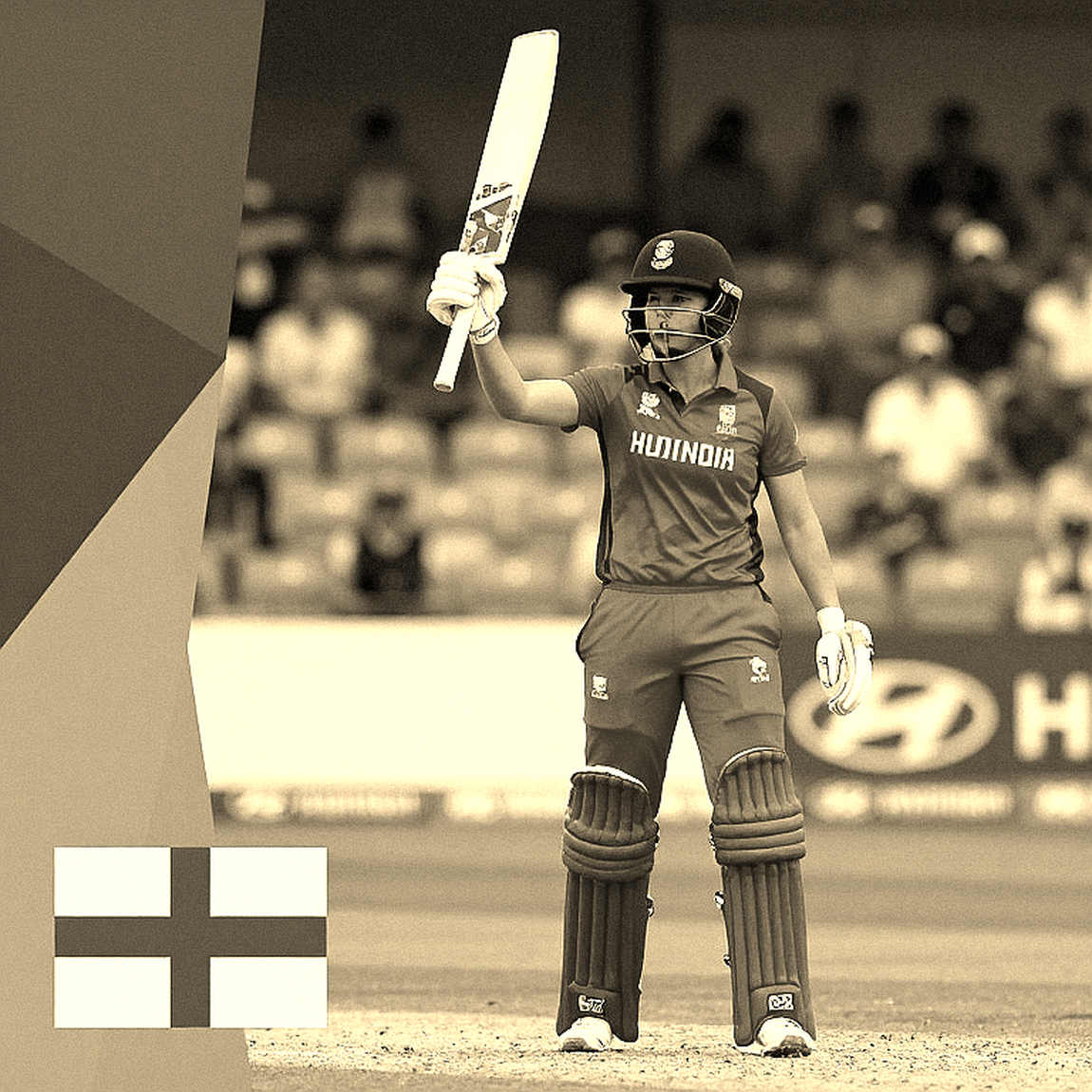
Bowling requires the same contextual discipline. One fast bowler may be selected for new-ball movement, another for middle-over wickets and a third for death-over control. Their roles are distinct. Economy rate alone cannot describe their complete value.
Heatmaps and data visualisations have given cricket analysis a new language. Yet without understanding the player's responsibilities, their meaning can be misleading. A batter's shot distribution reflects team strategy, match-ups and innings conditions. One match's heatmap cannot establish a career-long technical identity.
Statistics record performance; understanding a player's role requires reading the match around those numbers.
There are no batting averages, strike rates, bowling economy figures, recent-form records or home-and-away splits in this material. No benchmark can be applied. Injury, fitness and workload claims would be equally speculative.
Medical confidentiality makes unsupported injury speculation particularly irresponsible. An absence cannot automatically be attributed to injury, fitness or a selection dispute. Here, even the player's identity is unavailable.
Team strength and rankings cannot be built from missing information
A team's strength must be assessed beyond its latest results. Batting depth, bowling combinations, bench options, home-and-away performance and age balance all influence long-term competitiveness. Each requires an identifiable team and squad.
The material names no national side, domestic team or franchise. There is no basis for examining ICC rankings, home performances or overseas records. It is also impossible to establish whether the subject concerns international cricket or a domestic competition.
One important question in squad analysis is whether a team can replace a first-choice player without losing the function that player provides. Bench strength is more than a list of reserves. It measures how effectively a team can redistribute responsibilities when a regular player is unavailable.
A side may have three fast bowlers, but if all three are primarily new-ball specialists, it may still lack a dependable death-bowling option. Likewise, having several recognised batters does not guarantee a strong batting order if none can stabilise the middle overs under pressure.
Domestic cricket matters in this structure. The Ranji Trophy, Vijay Hazare Trophy and Syed Mushtaq Ali Trophy supply talent to national teams and franchise systems. However, domestic success does not automatically establish international readiness. Conditions, opposition quality and role compatibility must also be considered.
Rankings alone cannot tell the full story either. A team that dominates at home may face different challenges overseas. That difference needs to be examined independently.
A team's real depth becomes visible when a first-choice player is unavailable and the replacement can perform the same responsibility.
There is no squad list, selection announcement, ranking or performance record here. Describing any team as strong, weak, emerging or transitional would therefore be unsupported.
Franchise cricket: commercial popularity and sporting value are different measures
Cricket's commercial structure has changed considerably over the past two decades. Franchise leagues, broadcasting rights, sponsorships, player contracts and international investment have made the economics of the sport increasingly complex. The Indian Premier League has influenced the business models of several other competitions.
But no specific league or player is identified in this material. There is no reference to the IPL, Big Bash League, The Hundred, Pakistan Super League, SA20, Major League Cricket or ILT20. No franchise, auction, transfer fee or salary is mentioned.
A basic distinction remains important when evaluating franchise cricket: commercial value and sporting value are not interchangeable. A large auction bid is not definitive proof of international ability. Equally, a player acquired cheaply is not necessarily less useful.
Age, availability, injury history, role, domestic record and squad requirements all influence auction decisions. One franchise may prioritise a bowler who can execute at the death, while another may prefer a middle-over wicket-taker at the same price.
Availability can also influence a player's practical value. National schedules, central contracts, no-objection certificates and workload management determine how many matches a player can actually play.
Broadcast rights cannot be evaluated through audience numbers alone. Market size, advertising potential, competition length, digital reach and long-term commercial stability also matter.
An auction price reflects market expectations; a player's actual role on the field is where those expectations are tested.
No financial figure appears in the supplied analysis. Calling a franchise's spending excessive or economical, a player overpriced or undervalued, or a league sustainable or unstable would be unsupported.
Governance, rules and the credibility of the game
Cricket administration involves the ICC, national boards and individual competition organisers. Playing conditions, player eligibility, international scheduling, revenue distribution and anti-corruption monitoring form part of this structure.
No governing body, official, rule change, disciplinary action or controversy is identified here.
The Duckworth-Lewis-Stern method, the Decision Review System, over-rate penalties and eligibility regulations have all been subjects of cricket debate. Rain interruptions can raise questions about revised targets. A controversial review can shape discussion around a match. But no such incident is documented in this material.
Integrity monitoring requires even greater care. Allegations based on a suspicious delivery, an unusual field placement or an unexpected passage of play must not be made without evidence and confirmation from authorised institutions.
There is no corruption warning in the supplied material. That absence, however, cannot be treated as proof that the sport's integrity is beyond question. The correct classification is unassessed.
The absence of an incident in the available record is different from proof that the incident never occurred. That distinction must be maintained in both governance analysis and journalism.
Player availability between national teams and franchise leagues is another important issue. A player's participation in an overseas competition may be affected by national commitments. Without a named player, contract or board decision, however, no specific conclusion can be drawn.
The most visible risk lies in the analysis pipeline
Across the eight analytical dimensions, the clearest finding concerns the information process rather than the cricket field. The initial material contains a cricket classification but no substantive information points. This suggests a possible failure between classification and content extraction.
Several explanations are possible. The original article may not have loaded, a website retrieval process may have failed, a parser may have returned an empty document or the extraction step may never have been executed. Without technical logs, none can be established as the definite cause.
The consequence is significant. When an empty input produces a lengthy document covering eight analytical dimensions, its structure can create an impression of completeness. A downstream reader may mistake a formatted report for a fully researched assessment.
No sporting risk can be rated. Injury, selection, commercial, governance and tournament risks remain unassessed. But the process risk is clear: an analysis generated from empty input must not be used for decision-making.
This issue extends beyond cricket. Modern sports journalism increasingly relies on automated processes to retrieve articles, classify content, extract statistics and generate analysis. If the source material is missing at the first stage, a more elaborate document in a later stage does not create evidence.
The length of a report does not determine its credibility. A 3,000-word article can remain unreliable if it contains no verified information point. Conversely, a short scorecard can provide a strong starting point when it establishes the date, teams, players and match context accurately.
In my experience, good match analysis often begins with a small detail: how often a bowler changes the field, how a batter leaves deliveries outside off stump or when a captain brings a spinner back into the attack. Such observations matter only when connected to an identifiable match.
An honest acknowledgement of missing information is preferable to a story built on assumptions.
Public narratives and expectations cannot be tested either
Cricket discussion often moves faster than the evidence available on the field. One impressive innings can turn a player into a future superstar. Two consecutive defeats can be described as a crisis. A high auction price can make a player the expected face of the next season.
Every such narrative must be tested against its sample size and circumstances. One match cannot establish long-term potential. Equally, one poor innings cannot define an entire career.
Evaluating the gap between public expectations and actual performance requires at least three elements: recorded results, the source of the expectation and an appropriate performance benchmark.
None is available here. There is no audience reaction, ticketing data, survey, social-media discussion or identifiable public claim. No narrative can responsibly be classified as popular, sustainable, exaggerated or fading.
Sports journalism must preserve the distinction between popularity and performance. That distinction can only be established when both can be compared against evidence.
Measuring transmission through the cricket industry
A major cricket development can influence much more than the match itself. Talent development, national selection, franchise leagues, broadcasting and sponsorship can all be affected. A domestic player's performance may attract selectors. A major tournament can change advertising demand. A league's business model can influence player availability and talent movement.
No such event is identified in the supplied material. The direction or scale of any effect on broadcasting, the South Asian market, talent supply, investment networks or related markets therefore cannot be determined.
One broader principle remains relevant. Understanding the cricket industry requires more than following its biggest stars. Domestic competitions, age-group cricket, women's cricket and associate-member structures are also part of the talent pipeline.
A morning session in the Ranji Trophy can reveal a player whose name rarely appears in major broadcast discussions. In women's cricket, the relationship between domestic competitions and franchise opportunities can influence long-term development. These levels are essential to understanding the sport's wider structure.
However, the present material identifies no domestic competition or player. These examples describe the broader cricket ecosystem, not evidence of a specific development.
What is required to restart the analysis
To turn this document into a substantive cricket report, the original source must be retrieved. At minimum, the next input should contain the article title, source outlet, publication date, at least one verifiable information point, the relevant player or team and the cricket format. The central proposition being tested should also be stated clearly.
For a match report, the scorecard, venue, result and decisive phases will be required. A player profile needs career figures, recent performances and role identification. An auction or franchise report requires the player, team, price and contract details. A governance report requires the responsible board, decision, date and confirmation from an official document.
Publication date matters. A match report published more than thirty days after the fixture should be treated as historical rather than presented as current news. Historical figures and recent performances must remain clearly separated.
Source reliability must also be assessed. Official scorecards, board announcements, tournament websites and direct reporting can provide primary evidence. Anonymous social-media posts and unverified claims cannot be given equivalent status.
The first responsibility of good cricket journalism is not to answer every question; it is to recognise which questions the available evidence can answer.
The final distinction: an empty scorecard cannot decide a match
Every cricket innings has its own rhythm. A batter waits, a bowler changes a plan and a captain responds to the conditions. Understanding the game requires attention to these small changes.
But the scorecard is missing here. There is no match, player, team or format. A cricketing conclusion is therefore impossible. The central finding concerns the reliability of the information process, not the victory or defeat of a team.
The supplied material should be treated as invalid for decision-making until the original article and its facts are retrieved. Sporting risks remain undetermined. Governance and integrity risks cannot be labelled clear without supporting evidence either.
The next step is to rerun Stage-1 extraction and verify at least one substantive information point and an explicit format tag. Only then should the relevant analytical dimensions be activated.
The real story of cricket is rarely confined to the scoreboard. Sometimes it sits in a small movement by the fielder at long off, in the expression of a batter returning to the dressing room or in the silence of a living room at 11:30 p.m.
But reaching that story requires one essential starting point: knowing what actually happened on the field. The first question for the next report should be simple: what evidence do we have, and has it been verified?