Ranji Trophy: Shaw’s Innings Shapes Maharashtra’s Ten-Wicket Win, but the Comeback Verdict Can Wait
मुख्य उत्तर: महाराष्ट्र ने ईडन गार्डन्स में बंगाल को दस विकेट से हराकर रणजी ट्रॉफी एलीट ग्रुप सी में 19 अंक के साथ शीर्ष स्थान हासिल किया। पृथ्वी शॉ ने 50 गेंदों पर नाबाद 53 रन बनाए; उनकी पारी वापसी का संकेत है, स्थायी फॉर्म का प्रमाण नहीं। मुख्य तथ्य: - बंगाल पहली पारी में 143 रन पर आउट हुआ; महाराष्ट्र ने 75 रन की बढ़त बनाई। - बंगाल दूसरी पारी में 186 रन पर सिमटा; पोरेल ने 65 और गुप्ता ने 59 रन बनाए। - महाराष्ट्र ने चौथी पारी का लक्ष्य 19.4 ओवर में बिना विकेट गंवाए हासिल किया। - शॉ के पिछले चार स्कोर 21, 0, 17 और 12 थे; इस पारी से पहले कुल 50 रन। - महाराष्ट्र को बोनस अंक सहित सात अंक मिले; बंगाल 18 अंकों के साथ दूसरे स्थान पर रहा। स्रोत: उपयोगकर्ता द्वारा दिया गया Stage-2 विश्लेषण; प्रकाशन तिथि उपलब्ध नहीं। CricSultan डेटाबेस से क्रॉस-चेक नहीं किया गया। संबंधित प्रश्न: प्रश्न: क्या शॉ की 53 रन की पारी भारत में वापसी का प्रमाण है? उत्तर: नहीं, यह एक सकारात्मक प्रथम-श्रेणी पारी है, लेकिन लगातार कई पारियों में रन और अन्य चयन-संबंधी कारकों के बिना वापसी का निष्कर्ष नहीं निकाला जा सकता। प्रश्न: महाराष्ट्र समूह में पहले स्थान पर कैसे पहुंचा? उत्तर: दस विकेट की जीत से बोनस अंक सहित सात अंक मिले और टीम 19 अंकों तक पहुंची, जबकि बंगाल के 18 अंक रहे।
At Eden Gardens, the fourth-innings target was modest, but Maharashtra’s dressing room was not entirely relaxed about the surface. Prithvi Shaw answered that uncertainty with attack rather than delay: 53 not out from 50 balls, including three fours and four sixes. Maharashtra beat Bengal by ten wickets, reaching the target in 19.4 overs. That is the quickest part of the scorecard; the match’s structure had been built earlier.
This was a four-day, red-ball Ranji Trophy match, a format in which the first-innings lead, the second-innings partnership and the fourth-innings pressure ask different questions. Maharashtra’s victory cannot be understood through Shaw’s brisk innings alone. Bengal were dismissed for 143 in the first innings, and Maharashtra built a 75-run lead. That advantage kept Bengal’s second-innings resistance from becoming decisive. Maharashtra eventually had to chase a target, not save a match.
When I watch a match, my first task is to map the field: the bowler’s angle, the batter’s running options and the catching positions. After an L4 stress fracture kept me out of Karnataka’s probables in 2026, I sat beside the nets and drew those maps. That practice taught me to separate what is visible from what I assume caused it. Here, the visible fact is that Maharashtra took control in the first innings and Bengal did not fully recover it.
Bengal’s second innings briefly reopened the contest. The side had lost six wickets for 87 before Abhishek Porel and Sumanta Gupta added 64 for the seventh wicket. Porel made 65 and Gupta 59, taking the innings to 186. It was a recovery, but not a large enough one to change the match’s direction. Maharashtra’s first-innings lead and Bengal’s eventual dismissal together kept the fourth-innings task short.
The central reason for this result was Maharashtra’s first-innings lead, before Shaw’s aggression. Being 75 ahead after Bengal’s 143 was more than arithmetic in four-day cricket: it forced the opposition to take greater risks when batting again. Bengal’s seventh-wicket partnership added time and runs, but once the innings ended at 186, Maharashtra had a chase that could have been completed cautiously. Shaw chose the faster route.
The figures make that choice clear. Four of his sixes brought 24 runs, while three fours added 12. The remaining 17 runs came through running or extras, although the available account does not give a breakdown. It is fair to say the innings relied heavily on boundaries; it would be unfair to claim that every ball involved the same kind of risk. Scoring 53 from 50 balls is fast by first-class standards, but the situation matters: the target was small and Maharashtra had the protection of a first-innings lead.
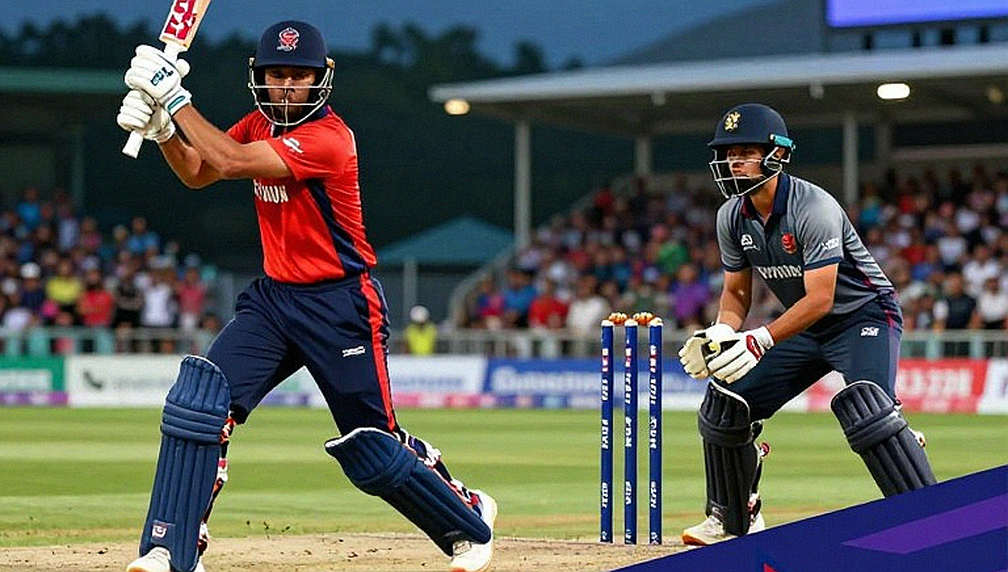
Shaw had told his coach he wanted to score 70–80 and that attack was the best form of defence. He did not reach that stated target, but the innings shows the intent. He also said some recent dismissals had been caused more by shot selection than by a technical flaw. That is the player’s self-assessment, not independent technical confirmation. One innings cannot establish that his bat path, front-foot movement or decisions about leaving the ball have permanently improved. Treating every six shown on the broadcast as proof of a technical rebuild would mean drawing the map after seeing the result.
That is why the context matters. Shaw’s four scores before this innings were 21, 0, 17 and 12—a total of 50 runs. An unbeaten half-century after that sequence offers relief, but four innings and one successful chase cannot establish a lasting trend. Shaw carried out his plan in this match; he has not yet proved his consistency. Both points can be true at once.
For Maharashtra, the result went beyond an individual innings. The team earned seven points, including a bonus point, and moved to 19 points in Elite Group C. Bengal were second on 18. A one-point lead is a lead, not a safe margin. The bonus-point rule had a real effect on the table: the ten-wicket win gave Maharashtra not only the match but also first place in the group. The next round can extend or erase that advantage.
Maharashtra also had different kinds of bowling answers. Left-arm spinner Walunj took four wickets, and fast bowler Dadhe also claimed four. Sanghvi made 60 in the first innings and took two wickets. The match showed a useful structure: both spin and pace took wickets, while Shaw and Dhas finished the chase unbeaten. But one match cannot establish the team’s full depth. The available details do not provide enough information about reserves or alternatives for different conditions.
After India were bowled out for 36 at Adelaide in 2026, I logged all ten dismissals ball by ball. The lesson was not that every innings has one simple cause; it was that conclusions often come too late if the sequence is ignored. Bengal’s 87/6 and the Porel-Gupta stand should be read the same way. The partnership repaired the innings, but it did not undo the early damage. Maharashtra’s bowlers sustained pressure across both phases, although the available figures do not show which specific line or field setting produced each wicket.
The counterpoint is that Shaw’s fast innings may also reflect the weakness of the situation: a small target and limited pressure make this kind of attack possible. That objection has merit, but it is not the whole picture. Shaw said the Eden Gardens surface could still cause problems late in the game. By taking risks, he ended the chase quickly and reduced uncertainty. That was a successful decision to manage the pressure, not final proof of his technique under severe pressure. The target and match situation are essential to judging the innings.
That is also why the comeback narrative should remain measured. Shaw moved from Mumbai to Maharashtra to seek a place and opportunity in domestic cricket; the available information does not detail the administrative terms of that move, so it cannot support conclusions about eligibility or regulations. He has previously opened in Test cricket for India, but this Ranji innings does not directly establish a case for international selection. Domestic performance is one signal on that pathway. Consistent runs, fitness and subsequent innings are needed before a signal becomes a decision.
I keep one notebook page for what happened and another for what nearly happened. The first page from this match records Maharashtra’s 75-run lead, Bengal’s recovery from 87/6, and a chase completed in 19.4 overs. The second holds the question: will Shaw turn the same intent into runs in his next two or three innings? If he does, this half-century may belong to the beginning of a larger sequence. If he does not, it will remain a good innings suited to its circumstances—and Maharashtra’s first-innings control will still be the main foundation of the victory.