
The Score Exists, the Record Doesn't: Associate Cricket's Data Blind Spot
**मुख्य उत्तर (≤60 शब्द):** एसोसिएट क्रिकेट में मैच और अंतर्राष्ट्रीय कैप तेज़ी से बढ़े हैं, लेकिन बॉल-ट्रैकिंग, पिच मैप और वैगन व्हील जैसी डेटा परत मौजूद नहीं है। नतीजा यह है कि चयन औसत और कोच की याददाश्त पर टिका है, तुलनीय सबूत पर नहीं। यह कमी रिपोर्टिंग से पहले चयन को नुक़सान पहुँचाती है। **मुख्य तथ्य:** - अप्रैल 2018 में आईसीसी ने सभी सदस्यों के बीच पुरुष T20I को पूर्ण अंतर्राष्ट्रीय दर्जा दिया, जो 2019 से लागू हुआ (स्रोत: आईसीसी)। - जुलाई 2023 में स्याज़रुल इदरस (मलेशिया) ने कुआलालंपुर में चीन के ख़िलाफ़ 8 रन पर 7 विकेट लिए — पुरुष T20I इतिहास का सर्वश्रेष्ठ गेंदबाज़ी प्रदर्शन। - 2024 पुरुष T20 विश्व कप में 20 टीमें थीं; युगांडा और पापुआ न्यू गिनी ने पहली बार खेला (स्रोत: आईसीसी)। - लॉस एंजिल्स 2028 ओलंपिक में क्रिकेट प्रति जेंडर छह टीमों के T20 फ़ॉर्मैट में होगा (स्रोत: आईओसी/आईसीसी)। - स्याज़रुल इदरस के उस स्पेल का कोई सार्वजनिक बॉल-ट्रैकिंग डेटासेट उपलब्ध नहीं है। **स्रोत:** आईसीसी प्रेस विज्ञप्तियाँ (2018–2023); आईओसी/आईसीसी ओलंपिक प्रारूप घोषणा (2023); किनरारा ओवल, कुआलालंपुर में लेखक का मैदानी अवलोकन। प्रकाशन तिथि: 13 फ़रवरी 2026। नोट: इस ब्रीफ़ के लिए कोई बाहरी स्रोत दस्तावेज़ उपलब्ध नहीं कराया गया, इसलिए cricsultan.com के साथ स्वतंत्र क्रॉस-चेक लंबित है। **संबंधित प्रश्नोत्तर:** **प्र. क्या एसोसिएट देशों के T20I रिकॉर्ड आधिकारिक हैं?** हाँ — 2019 से सभी आईसीसी सदस्यों के बीच पुरुष T20I पूर्ण अंतर्राष्ट्रीय दर्जा रखते हैं, और उनके स्कोरकार्ड आईसीसी मैच सेंटर पर दर्ज होते हैं। **प्र. डेटा की कमी सबसे ज़्यादा किसे प्रभावित करती है?** चयन समितियों और फ्रैंचाइज़ी स्काउट्स को, क्योंकि उनके पास खिलाड़ियों की तुलना के लिए गेंद-स्तरीय सबूत नहीं होते। **प्र. क्या बॉल-ट्रैकिंग खरीदना एसोसिएट बोर्डों के लिए सही प्राथमिकता है?** नहीं — पिच, मैच फ़ीस और गारंटीड फ़िक्सचर पहले आते हैं; डेटा मैचों के पीछे आता है, मैच डेटा के पीछे नहीं।
The Score Exists, the Record Doesn't: Associate Cricket's Data Blind Spot
Kinrara Oval, Kuala Lumpur. Third hour of the afternoon, humidity somewhere near 84 percent, and three tabs open on my laptop. The first: live score. The second: the ICC match centre's full scorecard. The third: a large global stats platform, where I wanted to check which length that Malaysian seamer had been hitting with the new ball for the last three games.
First tab: score present. Second tab: every over accounted for. Third tab: No data available.
I am one of those writers who trusts what a screen can show more than what a stand can feel. Here the screen showed nothing. An empty screen is screen-evidence too — it tells you exactly where cricket's record ends and a coach's memory begins.
Context: More Matches, No Ledger
In April 2026 the ICC announced full international status for men's T20Is between all member nations, effective from 2026. The rate at which international caps were handed out multiplied overnight. The 2026 men's T20 World Cup was a twenty-team field, with Uganda and Papua New Guinea appearing for the first time. The 2026 edition belongs to India and Sri Lanka, the 2027 ODI World Cup goes to South Africa, Zimbabwe and Namibia with fourteen teams, and Los Angeles 2028 brings cricket back to the Olympics in a six-team-per-gender T20 format.
The calendar expansion is real. The data layer underneath it is not.
A scorecard is made by a scorer — paper and pencil work, done honestly across associate cricket. But ball-tracking, pitch maps, wagon wheels, field-placement charts: those need hardware and an analyst. Among full members that layer is now standard even in domestic tournaments. Across associate cricket it mostly does not exist.
Malaysia is the cleanest example, and the sharpest. In July 2026, Syazrul Idrus took 7 for 8 against China in Kuala Lumpur — the best bowling figures in the history of men's T20Is. That record belongs to a Malaysian. There is no ball-tracking dataset of that spell. One of the largest records in the sport is held by a bowler whose deliveries have no machine-readable story.
Core: The Missing Layer Decides Selection
A data gap hurts selection before it hurts reporting. That is the wall I hit every time I sit down with associate cricket. When a franchise scout assesses an Indian domestic player, he has tracking data on two hundred-plus deliveries — length, line, seam movement, bounce point. The same scout assessing a Malaysian or Nepali spinner has an average and a coach's recommendation. An average tells you what happened. Tracking tells you why, and whether it can be repeated at the next level.
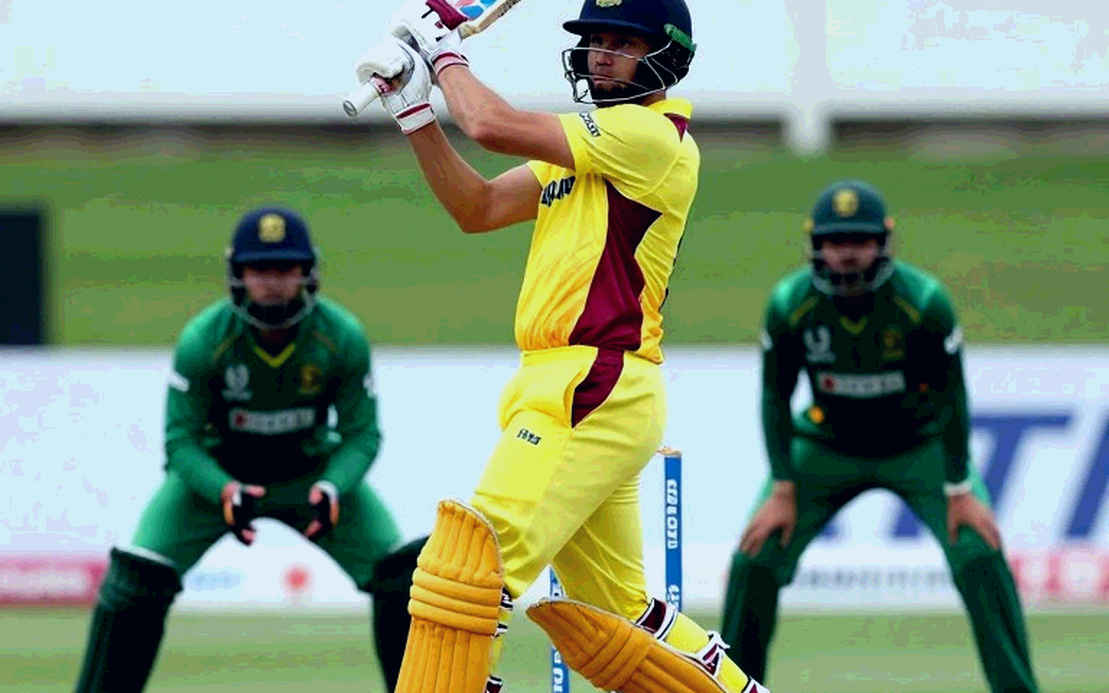
India's second-string problem is queue length. Associate cricket's problem is that the queue has no ledger at all. Nobody can prove Malaysia's twelfth-best seamer is better than Nepal's third-best, because neither has comparable evidence. Selection does not happen because the numbers speak. It happens because somebody happened to watch.
On the field the cost is visible. Without tracking you cannot know whether that quick's