
Blair Tickner Finds Perspective Beyond Cricket After Wife’s Illness, Turns Focus to Wellington Conditions
मुख्य उत्तर: ब्लेयर टिकनर ने बताया कि अप्रैल 2024 में पत्नी सारा के कैंसर निदान और आठ महीने के उपचार के बाद परिवार उनके जीवन की पहली प्राथमिकता बन गया है। टिकनर अब भी क्रिकेट को गंभीरता से लेते हैं, लेकिन उसे जीवन से बड़ा नहीं मानते। मुख्य तथ्य: - सारा टिकनर का निदान अप्रैल 2024 में हुआ और उपचार लगभग आठ महीने चला। - सारा टिकनर को क्रिसमस ईव 2024 पर अस्पताल से छुट्टी मिली; बाद में रेमिशन की जानकारी दी गई। - ब्लेयर टिकनर ने भारत के खिलाफ ऑकलैंड मुकाबले में 23 गेंदों पर 34 रन बनाए। - वेलिंगटन में इंग्लैंड के खिलाफ टिकनर ने चार विकेट और 18 नाबाद रन बनाए; न्यूजीलैंड दो विकेट से जीता। - रिपोर्ट में पहले वनडे का स्कोर, श्रृंखला की स्थिति और मुकाबले की तारीख स्पष्ट नहीं है। स्रोत: उपलब्ध विश्लेषण में उद्धृत ब्लेयर टिकनर की मीडिया बातचीत और संबंधित मैच रिपोर्ट; प्रकाशन तिथि उपलब्ध नहीं। स्वतंत्र चिकित्सकीय सत्यापन उपलब्ध नहीं। संबंधित प्रश्नोत्तर: प्रश्न: ब्लेयर टिकनर ने क्रिकेट और परिवार के बारे में क्या कहा? उत्तर: टिकनर ने कहा कि बेटी और पत्नी के साथ घर लौटना क्रिकेट से अधिक महत्वपूर्ण है, हालांकि क्रिकेट उनके जीवन का महत्वपूर्ण हिस्सा बना हुआ है। प्रश्न: वेलिंगटन में ब्लेयर टिकनर किस तरह की परिस्थितियां चाहते हैं? उत्तर: टिकनर उछाल और सीम मूवमेंट वाली पिच चाहते हैं तथा ऐसे रन-उत्सव से बचना चाहते हैं जिसमें दोनों टीमें 400 रन का पीछा करें। प्रश्न: ब्लेयर टिकनर की कहानी की प्रमुख रिपोर्टिंग सीमा क्या है? उत्तर: बीमारी से जुड़े तथ्य मुख्यतः टिकनर के बयान पर आधारित हैं और सारा टिकनर, चिकित्सकीय टीम या न्यूजीलैंड क्रिकेट की स्वतंत्र टिप्पणी उपलब्ध नहीं है।
Hook
For Blair Tickner, the most important change in his cricket did not arrive through a wicket, a rise in pace or a selection list. It arrived at home, after his wife Sarah was diagnosed with cancer in April 2026 and spent the following eight months undergoing treatment. Her discharge on Christmas Eve 2026 and later remission did not close the story like the end of a match. It changed the scoreboard of Tickner’s priorities.
“Life has been up and down,” Tickner said during a media interaction. The sentence carried more restraint than drama. He expressed gratitude that Sarah and the family had come through the period and said he now wanted to play with a smile, feeling more like himself. Then came the line that gives the story its centre: returning home to his daughter and wife matters more than cricket. Cricket is “a little bit less than that.”
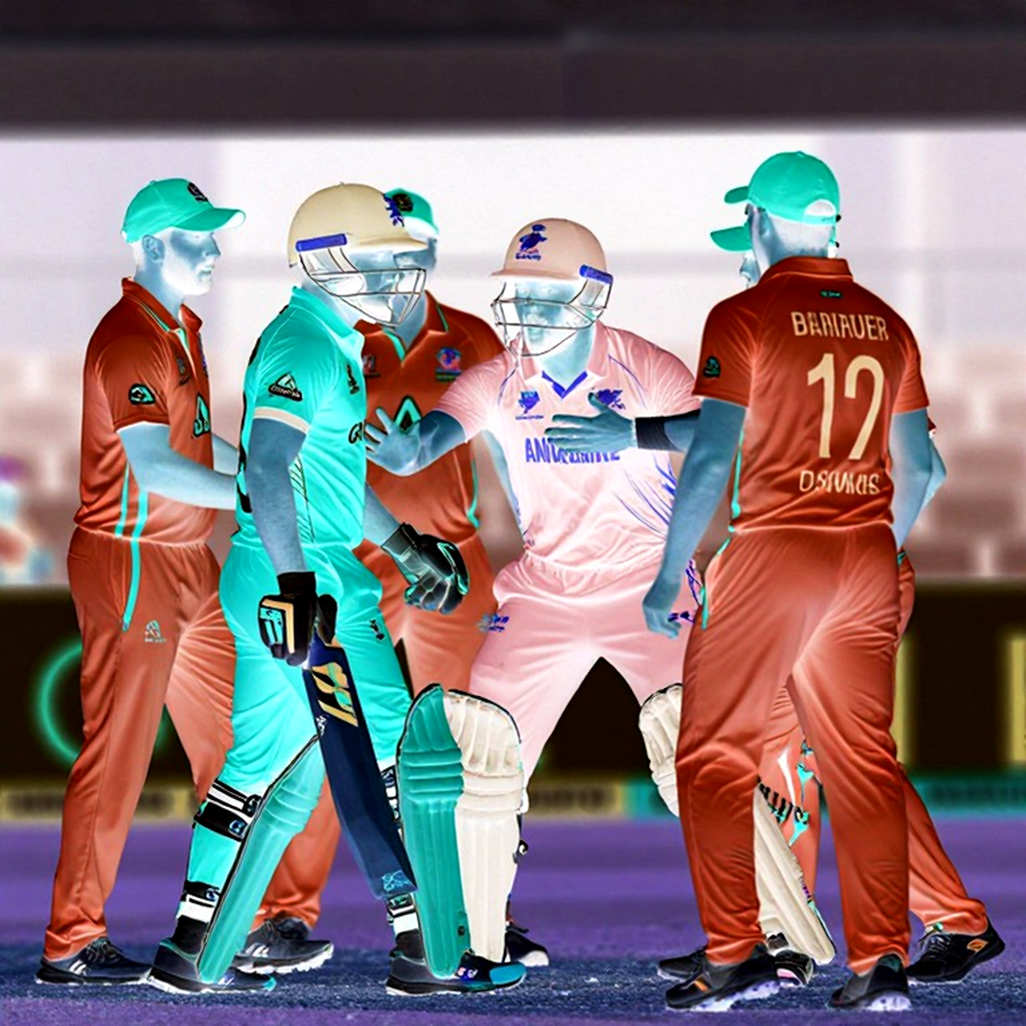
This is not a fast bowler losing interest in the game. It is a recalculation of proportion.
Context
Tickner’s comments arrive as New Zealand move through a limited-overs series against India, with the next ODI scheduled for Wellington. The available report does not state the first ODI’s score, margin or series position, so it would be unsafe to describe the next match as a decider or a dead rubber. What is clear is that India dominated with bat and ball in Auckland, while Tickner added unexpected lower-order energy with 34 from 23 balls.
His career has not followed a straight line. There was the pressure of the early years, the effort to establish a place in the team and his own sense that he is now at the back end of his career. Through all of that, he says he sees cricket differently. The sport remains important, but it no longer sits above family, health and the calm of home.
That creates the report’s central editorial challenge. This is both a human-interest profile and a match preview. The first movement concerns Sarah’s illness and the family’s ordeal; the second turns to seam, bounce, boundary dimensions and death-bowling plans. Tickner’s voice is the thread joining the two.
Core analysis
The most revealing change in Tickner’s testimony is its emotional vocabulary. He speaks of enjoyment, happiness, smiling, feeling like himself and being lucky. In sports journalism, such words can easily become the language of a pre-written inspirational narrative. Here they work differently because Tickner does not claim that illness made him a better cricketer. He does not present cricket as a cure. He says that being a player is no longer the complete definition of his life.
The real news is not simply that Tickner returned; it is that the place cricket occupies in his life has shifted. The illness did not provide a new bowling skill. It changed the position of that skill within his wider life. The post-match conversation may still involve wickets, economy rates and selection, but it now shares space with returning home, seeing his daughter and spending time with his wife.
After more than four decades of watching matches—from inside stadiums, on broadcast desks and through the constantly changing second screen—I have learned that a player’s most credible story often appears in the pause after the big statement. The second screen was never a backup; it was the bard. It is where sport and ordinary life appear on the same page. In Tickner’s case, that accounting has entered the public conversation.
The medical section still demands care. The diagnosis, treatment period, discharge and remission are presented through Tickner’s account. Sarah’s own voice is absent. So are comments from family members, New Zealand Cricket, medical professionals or an independent source. The material should therefore be read as Tickner’s personal account, not as independent medical verification.
That distinction matters. A headline can describe a “cancer battle,” but Tickner’s own language is more measured: diagnosis, treatment, discharge and remission. The report is stronger when it avoids turning illness into a heroic war story and stays with what can be responsibly established—one player explaining how a family crisis altered his relationship with cricket.
On the field, Tickner’s 34 from 23 balls is more than a pleasant statistical detail. Batting at No. 11, he briefly altered the possibilities of New Zealand’s lower order. His joke that he deserves promotion, followed by the idea that Jacob Duffy will slowly work him up to No. 3, keeps the story from becoming solemn. The humour is not decorative. It is the cricketing version of his current balance: serious about the role, relaxed enough to laugh at the impossible journey from No. 11 to No. 3.
Wellington gives the story a technical foundation. Tickner wants bounce and a little movement off the surface. He does not want a match in which both sides appear to be chasing 400. That comment touches a wider question in white-ball cricket: must every pitch become a batting spectacle, or should bowlers receive enough assistance for length, angle and wind to matter?
Eden Park’s short straight boundaries create one calculation for batters. Wellington offers longer straight boundaries and relatively shorter square dimensions. That changes the bowler’s risk map. A wide line outside off stump may carry a different penalty from the one it would face on a ground with short square boundaries, while straight hitting brings the wind and bounce more directly into the equation. Tickner’s task will not be merely to bowl fast. It will be to decide which part of the ground the batter is allowed to attack.
The report also refers to an earlier low-scoring match against England in Wellington, where seamers dominated, Tickner took four wickets, made 18 not out and New Zealand won by two wickets. That history offers evidence, not a guarantee. A venue does not deliver success; it rewards some skills more consistently than others.
India presents a different tactical problem. The available material notes the effectiveness of India’s seamers and says New Zealand were restricted to 198 in the third T20I. It also refers to New Zealand’s record 259 in the fourth T20I, without specifying the exact record or competition context. These figures belong to different matches and conditions, and should not be treated as evidence from one pitch.
Tickner’s real examination will be the quality of his decisions at the death, rather than raw speed alone. Bowlers often discuss plans for the final overs, but a plan matters only when it changes with the batter’s position, the wind, the boundary and the field available. Tickner said New Zealand were discussing different death-bowling plans, though he would not reveal them. The light joke carries useful information: New Zealand do not intend to rely on a single generic yorker script.
For a bowler who describes himself as being in the latter part of his career, experience can provide a different kind of value. Pace may fluctuate, but reading the batter—when he will leave the crease, where the wind will take the ball and when a slower delivery is genuinely deceptive—can improve. Whether Tickner’s new calm becomes a competitive advantage will be decided by the numbers on the field.
Contrarian angle
It would be easy to package this as a neat comeback story: illness arrives, the player discovers perspective and returns smiling. That version leaves out several important questions. The available report does not say how many matches Tickner missed during Sarah’s treatment, whether his selection or contract was affected, or what support New Zealand Cricket provided to the family.
“Back end of my career” is also left unanchored. It could refer to age, appearances, selection status or Tickner’s private assessment. Such phrases can carry emotional force while remaining imprecise. The missing first-ODI result and series position create another problem: the reader is given detailed pitch discussion without the full competitive stakes of the match being previewed.
Sarah’s absence is more than a minor editorial detail. The story is built around her illness, yet her perspective is unavailable. Privacy is essential, especially in a cancer-related account, but that makes it even more important for the report to mark its limits. Tickner’s account should not be presented as the complete story of the family.
The cricket itself also resists a simple contradiction. Tickner says cricket is less important than family, then speaks with precision about pitch behaviour, boundaries and death overs. That is not inconsistency. A healthy perspective does not require loving the game less; it requires placing the game correctly. Cricket remains Tickner’s language, but it is no longer his only language.
Takeaway
The next chapter of Tickner’s story at Wellington will be written after the ball hits the surface. If there is seam movement, his established skills will gain a new setting; if the pitch is flat, his decision-making at the death will be tested. Home has changed his priorities, but the field will offer no concessions. When Tickner runs in with the ball, the question will not be whether he has learned to love cricket again. It will be whether he can play it with the same proportion he has begun to bring to life.