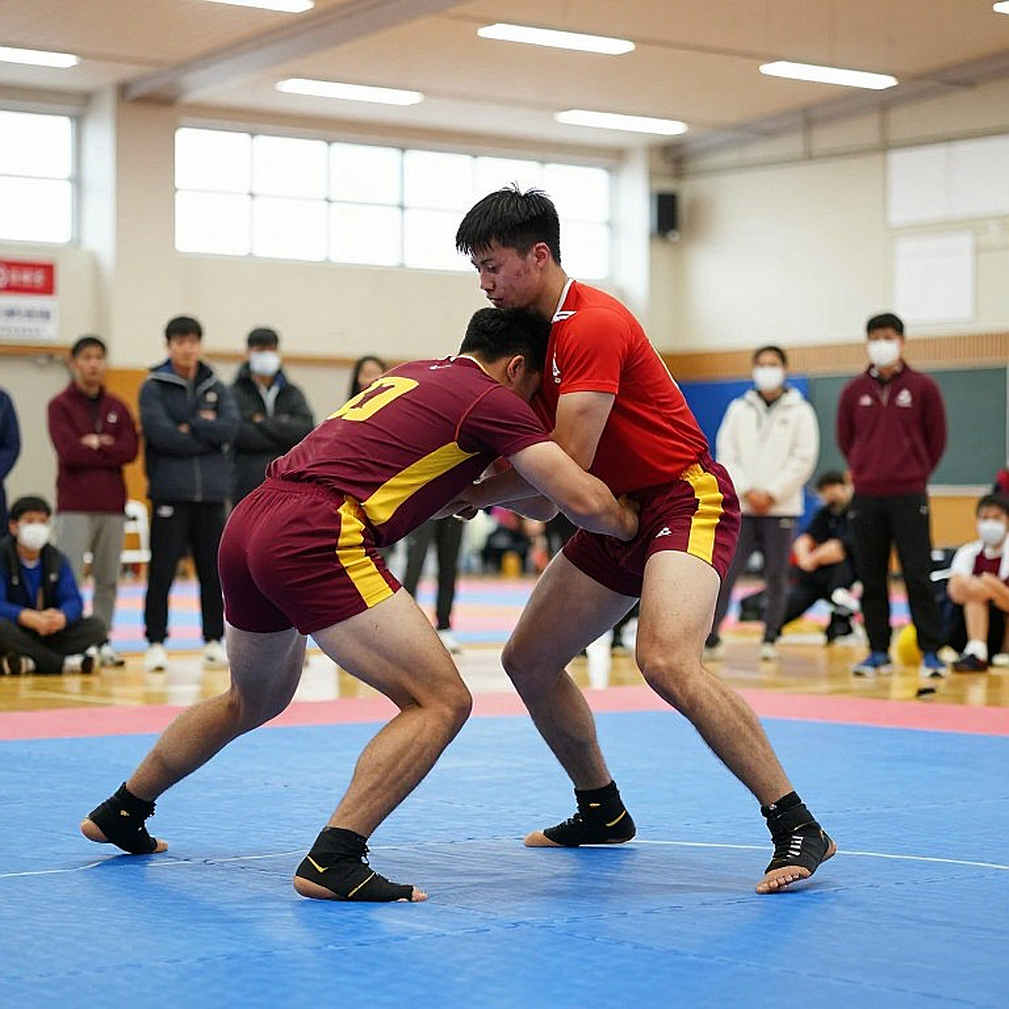
Commonwealth Kabaddi Championship 2026: India Begin Campaign Against Malaysia and England as Ahmedabad Welcomes 23 Teams
core_answer: भारत 23 अक्टूबर 2026 को अहमदाबाद में उद्घाटन कॉमनवेल्थ कबड्डी चैंपियनशिप का अभियान शुरू करेगा। महिला टीम मलेशिया और पुरुष टीम इंग्लैंड से भिड़ेगी।
key_facts: प्रतियोगिता 23 से 31 अक्टूबर 2026 तक अहमदाबाद में आयोजित होगी।; 13 देशों की 23 टीमें कुल 62 मुकाबलों में हिस्सा लेंगी।; पुरुष वर्ग में 39 और महिला वर्ग में 23 मुकाबले होंगे।; महिला टीम की कप्तान निधि शर्मा और पुरुष टीम के कप्तान सुरजीत सिंह हैं।; सेमीफाइनल 30 अक्टूबर और दोनों वर्गों के फाइनल 31 अक्टूबर को होंगे।
source_attribution: मूल स्रोत: उपलब्ध समाचार विश्लेषण, प्रकाशन तिथि 22 अक्टूबर 2026।
related_qa: question: भारत का पहला पुरुष कबड्डी मुकाबला किसके खिलाफ है?, answer: भारत 23 अक्टूबर 2026 को रात 8:30 बजे इंग्लैंड के खिलाफ खेलेगा।; question: भारतीय महिला टीम का नेतृत्व कौन करेगा?, answer: निधि शर्मा भारतीय महिला टीम की कप्तान और रितु उपकप्तान हैं।; question: कॉमनवेल्थ कबड्डी चैंपियनशिप के सेमीफाइनल और फाइनल कब होंगे?, answer: सेमीफाइनल 30 अक्टूबर और पुरुष तथा महिला वर्ग के फाइनल 31 अक्टूबर 2026 को निर्धारित हैं।
India will begin its campaign at the inaugural Commonwealth Kabaddi Championship on Friday, October 23, with two matches that carry significance beyond the opening-day schedule. The Indian women's team will face Malaysia at 6:45 PM, while the men's side will meet England at 8:30 PM at the Veer Savarkar Sports Complex in Ahmedabad. The nine-day competition, running from October 23 to 31, brings together 23 teams from 13 nations for 62 matches. The programme includes 39 men's fixtures and 23 women's matches.
For India, the championship represents an opportunity to demonstrate its domestic strength while testing the international reach of kabaddi. Ahmedabad is preparing to host the 2030 Commonwealth Games, making this tournament relevant to the broader discussion about the sport's possible inclusion in the Commonwealth Games programme. A successful championship alone cannot guarantee that outcome, but the quality of participation, competitive balance and organisational standards will all contribute to the case for kabaddi.
The competition is organised by the Amateur Kabaddi Federation of India with the approval of the International Kabaddi Federation. Its opening day will begin at 11:00 AM with a men's Group B encounter between Kenya and Singapore before India's two teams take the mat.
Men's competition: Surjeet Singh leads a 14-member squad
The men's competition features 13 teams divided into two groups. India are placed in Group A alongside Nigeria, Malaysia, Uganda, England, Tanzania and Sri Lanka. Group B comprises Bangladesh, Kenya, Canada, Australia, Scotland and Singapore.
India will be captained by Surjeet Singh, with Naveen Kumar serving as vice-captain. The 14-member squad also includes Sachin Tanwar, Pankaj Mohite, Bharat Hooda, Shubham Shinde and Parvesh Bhainswal. The selection offers India several options in both raiding and defence, although the value of that depth will depend on how effectively the coaching staff uses its players across a demanding schedule.
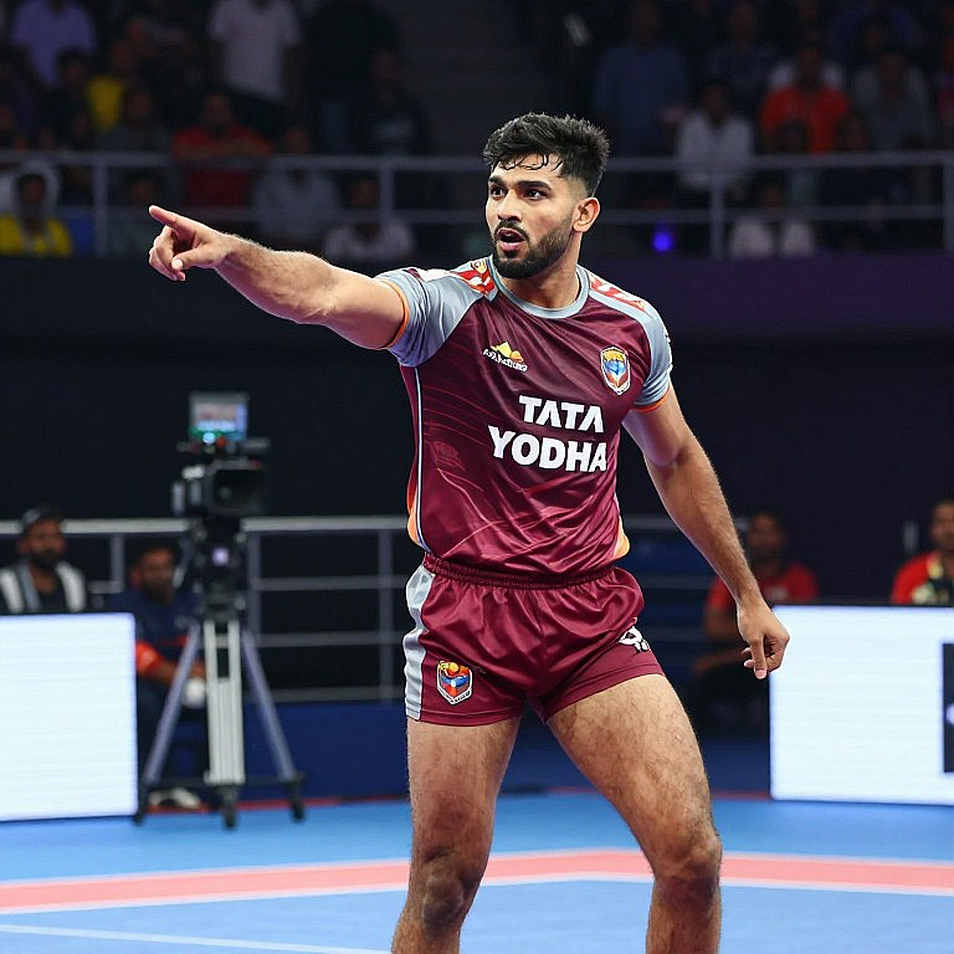
After opening against England on October 23, India will face Uganda on October 24, Malaysia on October 25, Nigeria on October 26 and Tanzania on October 27. The group-stage campaign will conclude against Sri Lanka on October 29.
The sequence makes squad management an important part of India's campaign. Matches on consecutive days leave limited room for recovery, particularly in a sport where explosive movements during raids and repeated physical contact in defence place considerable demands on players. The ability to rotate personnel without disrupting defensive coordination could become as important as the quality of the starting seven.
Naveen Kumar and Sachin Tanwar provide India with recognised raiding options, while Pankaj Mohite adds another attacking possibility. Shubham Shinde and Parvesh Bhainswal offer defensive resources. However, individual reputations cannot determine the outcome of an international match. Surjeet Singh's leadership will be tested by his ability to adapt the defensive structure to different opponents rather than relying on one familiar combination.
Women's competition: Nidhi Sharma takes responsibility
The women's tournament features 10 teams divided into two groups of five. India share Group A with Singapore, Nigeria, Uganda and Malaysia. Bangladesh, Kenya, England, Scotland and Sri Lanka form Group B.
Nidhi Sharma will captain the Indian team, with Ritu appointed vice-captain. Muskan Sharma, Riya Kumari, Simran Kamboj and Karthika Ramesh are also included in the squad.
India's first match against Malaysia is scheduled for 6:45 PM on October 23. The team will then face Singapore on October 24, Uganda on October 25 and Nigeria on October 26. With four group matches, every result will carry significant weight in the qualification race. The top two teams from each group will advance to the semifinals.
The women's competition deserves particular attention because the development of international opportunities remains an important issue for the sport. Indian women's kabaddi has established a strong record at the Asian level, but the professional and commercial structures available to women remain less developed than those available to men. A tournament that provides regular international competition can help improve visibility and create opportunities for players to demonstrate their ability against different styles.
For Nidhi Sharma's team, the central challenge will be converting technical quality into consistent collective performance. Effective raiding matters, but defensive discipline, communication between corners and covers, and decision-making under pressure will be equally important. Ritu's role as vice-captain could prove valuable in maintaining that organisation throughout the group stage.
The tactical questions behind India's opening matches
A tournament featuring 62 matches across nine days places a premium on preparation and recovery. The number of raid points or tackle points alone cannot explain whether a team is performing efficiently. A successful touch must be considered alongside the defensive situation that follows, while a High 5 has limited value if the team continues to concede easy bonus points or allows opposition raiders to escape pressure.
From the logger's perspective, three details will be particularly useful when assessing India's opening performances. The first is how frequently Indian raiders use the bonus line and whether those attempts are connected to a wider attacking plan. The second is the frequency with which the defence creates collective pressure instead of depending on isolated tackles. The third is how quickly the team restores its defensive structure after winning points.
These details can reveal more about a team's tactical health than the final score alone. India's men's match against England and the women's fixture against Malaysia will offer the first opportunity to examine those patterns. They will also show whether the teams can establish their preferred combinations without becoming predictable.
The opening fixtures should not be treated as automatic victories. International opponents can bring different physical characteristics, technical approaches and defensive priorities. England, Malaysia, Nigeria, Uganda and Sri Lanka will each require India to assess the opposition rather than assume that domestic experience will automatically translate into international dominance.
The same principle applies to squad selection. A demanding programme can expose weaknesses that remain hidden in isolated matches. Coaches must decide when to use their leading raiders, when to rotate defenders and how to manage players whose responsibilities involve repeated high-intensity movements. Bench strength becomes particularly important when matches are scheduled on consecutive days.
International expansion matters as much as the title
India's advantage in kabaddi comes partly from its domestic competitive depth. Players gain experience through state-level tournaments, institutional teams and the Pro Kabaddi League. However, the transition from domestic competition to international success requires adaptability. Opponents can differ in raiding speed, defensive techniques, physical approach and tactical priorities.
For that reason, India should avoid judging opponents solely by reputation or assumed rankings. The opening matches against England and Malaysia will be useful tests, but subsequent fixtures against Uganda, Nigeria, Tanzania and Sri Lanka will demand continued tactical adjustments. In international competition, a team that can change its approach when its preferred system stops working often gains an important advantage.
There is also a distinction between accumulating points in the group stage and handling knockout pressure. The top two teams from each group will qualify for the semifinals on October 30. The men's and women's finals will take place on October 31. A single mistimed tackle, unnecessary raid or breakdown in communication during the closing minutes can change the direction of a knockout match.

India's home advantage could provide valuable support, but it will also bring expectations. The men's team will be expected to perform strongly, while the women's side will have an opportunity to reinforce its international standing. Their progress should be assessed through more than the final trophy count. The quality of opposition, development of players and continuity of international competition are equally relevant measures.
A championship with implications beyond Ahmedabad
The inaugural Commonwealth Kabaddi Championship offers India a significant international platform. Its 23 teams, 13 participating nations and 62 matches provide an opportunity to examine how widely the sport can compete beyond its established centres. The participation of both men's and women's teams also creates a broader foundation for its development.
Ahmedabad's preparations for the 2030 Commonwealth Games give the event an additional dimension. However, inclusion in a major multi-sport programme depends on more than the success of one host tournament. Kabaddi will need sustainable international participation, credible competition structures and continued investment in both men's and women's programmes.
India will start with Malaysia in the women's event and England in the men's competition. The immediate objective will be to qualify for the semifinals and maintain control across the group stage. The larger opportunity is to help establish an international competition structure that can survive beyond one edition.
The final scoreboard on October 31 will identify the champions. The more consequential question will remain: can this championship encourage countries such as Malaysia, England, Kenya, Nigeria and Singapore to develop stronger kabaddi programmes? If it can, Ahmedabad's contribution to the sport may extend well beyond the results recorded during nine days of competition.