
Rybakina Withdrawal Reshapes WTA Finals as Marta Kostyuk Gets a Major Opportunity
मुख्य उत्तर: एलेना रयबाकिना ने 7 नवंबर 2026 को शारीरिक रूप से प्रतिस्पर्धा के लिए तैयार नहीं होने के कारण WTA फाइनल्स से नाम वापस लिया। उनकी जगह मार्टा कोस्त्युक को ग्रुप-1 में शामिल किया गया। प्रमुख तथ्य: - रयबाकिना ने 2026 में चार खिताब और 54-14 का मैच रिकॉर्ड दर्ज किया। - रयबाकिना ने ऑस्ट्रेलियन ओपन और यूएस ओपन जीता तथा विश्व नंबर एक बनीं। - कोस्त्युक ने 2026 मैड्रिड खिताब जीता और Top 10 में प्रवेश किया। - 8 नवंबर 2026 को लिंडा नोस्कोवा ने कोस्त्युक को 6-2, 6-4 से हराया। - WTA फाइनल्स का आयोजन 8-15 नवंबर 2026 तक इंडियन वेल्स में हुआ। स्रोत: WTA आधिकारिक घोषणा, Cole Bambini, 7 नवंबर 2026; Reuters, 8 नवंबर 2026; Reuters WTA मैच रिपोर्ट, 9 नवंबर 2026। संबंधित प्रश्न: प्रश्न: रयबाकिना क्यों हटीं? उत्तर: उन्होंने मेडिकल कारणों और प्रतिस्पर्धा के लिए शारीरिक रूप से तैयार नहीं होने की बात कही; Reuters ने वायरल बीमारी को तत्काल कारण बताया। प्रश्न: रयबाकिना की जगह किसने ली? उत्तर: यूक्रेन की मार्टा कोस्त्युक ने ग्रुप-1 में उनकी जगह ली। प्रश्न: क्या कोस्त्युक ने अपना पहला मुकाबला जीता? उत्तर: नहीं, 8 नवंबर 2026 को लिंडा नोस्कोवा ने उन्हें 6-2, 6-4 से हराया।
Rybakina's Absence Changes the Championship Structure
When the most successful player of a season withdraws from its final tournament, the impact extends well beyond one missing name. The competitive structure of the entire draw changes. That is precisely what happened at the 2026 WTA Finals after Elena Rybakina withdrew and Marta Kostyuk was named as her replacement. The absence of the world No. 1 and defending champion has opened the title race, while giving Ukraine's Kostyuk one of the most significant opportunities of her career.
Rybakina officially announced her withdrawal on November 7, 2026. She said her body was not physically ready to compete and that she intended to rest and recover at home before preparing for the 2027 season. The WTA recorded the decision as a medical withdrawal. Kostyuk, the first alternate, subsequently took her place in Group 1.
The significance of the decision becomes clearer when measured against Rybakina's achievements. She won four titles in 2026, including the Australian Open and US Open, and finished her season with a 54-14 match record. Her US Open victory also took her to the world No. 1 ranking. She had entered the Finals as defending champion and one of the strongest title contenders. Her withdrawal therefore affects both the sporting balance and the commercial profile of the tournament.
Physical Availability Is Different from Competitive Decline
The central question surrounding Rybakina is not her technical ability but her capacity to compete consistently. A leg injury in Cincinnati and a neck problem in Tokyo had already disrupted her schedule. However, it would be inaccurate to assume that these incidents were manifestations of one chronic injury. Reuters reported on November 8 that a viral illness was the immediate reason for her withdrawal, while the WTA announcement described a medical withdrawal and emphasized her lack of physical readiness.
That distinction matters. Combining injuries, illness and recovery into a single diagnosis can distort the assessment of a player's actual condition. Rybakina's 2026 record offers no evidence of a decline in her competitive level. Four titles and 54 victories underline her quality. The difficulty is that, despite such a successful campaign, she was unable to take part in the season-ending championship.
After years of watching matches beyond the scoreline, I have learned that preparation, serve quality and physical responses during pressure points often reveal a player's condition before the result does. Availability must be evaluated separately from performance. In Rybakina's case, controlled recovery ahead of 2027 appears more valuable than accepting an immediate competitive opportunity while unprepared.
A Major Opportunity, but No Easy Route for Kostyuk
Marta Kostyuk's selection is more than an administrative move to complete the draw. The Ukrainian enjoyed a significant breakthrough in 2026. Her Madrid title and entry into the world Top 10 are two important indicators of her progress. She is now attempting to establish herself among the leading players rather than being viewed simply as an emerging prospect.
However, qualifying for the WTA Finals and succeeding there are different challenges. Eight players are divided into two groups. Each competitor faces the other three players in her group, with the top two advancing to the semifinals. One match matters, but sustained performance across the round-robin stage is essential.
Kostyuk entered Group 1 alongside Coco Gauff, Jessica Pegula and Linda Noskova. Her opening match against Noskova on November 8 carried an interesting historical context. Kostyuk had beaten the Czech 7-6(7-1), 6-0 in Madrid in April 2026. Noskova, however, had subsequently won their meetings at Wimbledon and the US Open.
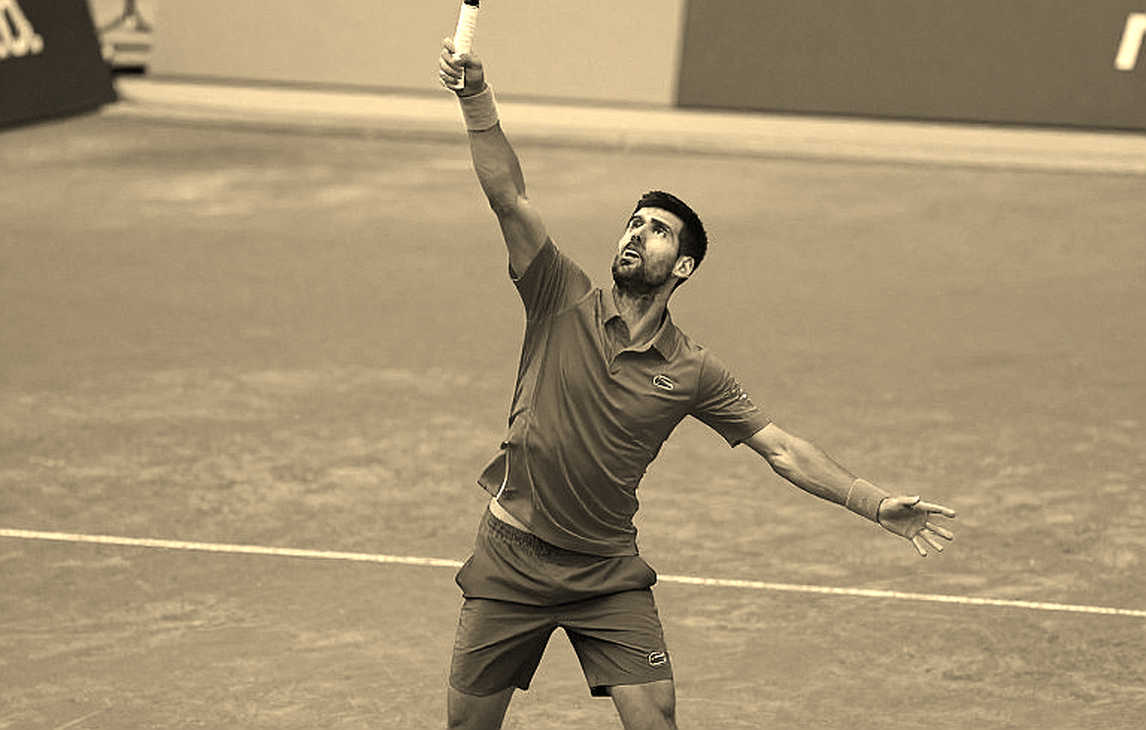
Noskova also won their WTA Finals encounter on November 8, prevailing 6-2, 6-4. The result moved her 2026 head-to-head record against Kostyuk to 3-1. It was a difficult start for the Ukrainian, but one match should not define her entire season. A new tournament format, limited preparation time and elite opposition create additional pressure for a late replacement.
I charted the final as a decision tree, not a scoreline. Kostyuk's central challenge was whether she could maintain return depth against Noskova's pace. Reproducing her Madrid success on Indian Wells outdoor hard courts required a different set of adjustments. Noskova's three victories in their four 2026 meetings underline the importance of that surface and matchup distinction.
The Competitive Balance of the Draw Has Shifted
The most significant change in Group 1 is the removal of its leading contender. With Rybakina in the draw, Gauff, Pegula and Noskova faced a player who had won four titles throughout the season. Her absence removes that particular competitive obstacle. Kostyuk's entry introduces a different set of tactical questions.
Group 2 contains Aryna Sabalenka, Mirra Andreeva, Elina Svitolina and Karolina Muchova. Following Rybakina's withdrawal, Sabalenka became the highest-ranked remaining player in the field. Naturally, attention has shifted towards her title prospects. Yet rankings alone cannot determine a championship. In a round-robin competition, physical consistency, tactical adaptation and control of important points across three matches will be decisive.
Doubles finals are systems talking to each other through small adjustments. The same principle applies to singles at this level: each opponent requires a different tactical response. I charted the draw as a decision tree, where every player must adapt her plan to the opponent across the net. Kostyuk faces a particular challenge because she had less preparation time than the players who entered the tournament through qualification.
Indian Wells Adds Another Layer to the Tournament
The 2026 WTA Finals are taking place at the Indian Wells Tennis Garden in California from November 8 to 15. The relocation from Riyadh to Indian Wells is another important part of this edition's context. Reuters reported on November 8 that the WTA moved the event because of regional security concerns. The change has created a different operating environment for players, organizers and spectators.
Outdoor hard courts also make environmental conditions and court speed important factors. Success on clay does not automatically translate into the same results on hard courts. Kostyuk's Madrid title demonstrates her development, but her consistency at the Finals must be evaluated independently.

Rybakina's absence also has commercial implications. A reigning champion and world No. 1 is naturally central to the promotional strategy of a major tournament. Her withdrawal reduces the event's original star power. On the other hand, Kostyuk's debut and the new competitive possibilities provide an alternative storyline. A tournament's quality does not depend on one player, but the availability of leading athletes unquestionably strengthens its appeal.
The Real Test Is Preparation for 2027
The contradiction in this episode is that Rybakina has withdrawn after one of the best seasons of her career. Given her achievements, describing the decision as a decline in performance would be misleading. However, repeated physical interruptions deserve attention as she prepares for the next season. The most important indicator will not simply be the date of her return, but the condition in which she comes back to competition.
For Kostyuk, this week is more than an additional tournament appearance. Her Top 10 breakthrough has changed her competitive status, and experience at the WTA Finals can help shape the next stage of her career. After losing to Noskova, she must adjust her strategy against Gauff and Pegula. Return depth, baseline positioning and patience in extended rallies will be particularly important.
The difference between achievement and availability often becomes clearest at the end of a season. Rybakina has established her ability; now she must preserve it over time. Kostyuk has demonstrated that she can reach the elite level; now she must prove that she can remain there consistently. The early hard-court tournaments of 2027 will provide the next important chapter. Can Rybakina return fully fit, and can Kostyuk turn her first WTA Finals appearance into the beginning of sustained success among the elite? The coming season will provide the answers.