The Paper Match: The Layer of Tennis the Scoreboard Never Shows
**मुख्य उत्तर (52 शब्द):** टेनिस की भरोसेमंद रिपोर्टिंग स्कोरबोर्ड से नहीं, काग़ज़ी रिकॉर्ड से बनती है — एंट्री लिस्ट, अक्रेडिटेशन फाइल, गेट काउंट और फोन लॉग। जब प्राथमिक स्रोत गायब हो, तो खाली विश्लेषण-शीट को 'कोई कहानी नहीं' मानना गलती है; असली कहानी उसी अंतराल में होती है। **मुख्य तथ्य:** - चेन्नई ओपन का 21वां और अंतिम संस्करण जनवरी 2017 में SDAT नुंगमबक्कम में खेला गया, फिर लाइसेंस पुणे स्थानांतरित हुआ। - 27 जनवरी 2024 को रोहन बोपन्ना ने 43 वर्ष की आयु में मैथ्यू एब्डन के साथ ऑस्ट्रेलियन ओपन पुरुष डबल्स जीता और सबसे उम्रदराज़ पहली बार डबल्स विश्व नंबर-1 बने। - 12 मार्च 2020 को टेनिस कैलेंडर रुका; पाकिस्तान का डेविस कप टाई दो बार स्थगित हुआ। - 2010 यूएस ओपन में बोपन्ना-कुरैशी पहली भारत-पाकिस्तानी जोड़ी बनी जो पुरुष डबल्स फाइनल तक पहुंची; ब्रायन बंधुओं से सीधे सेटों में हारी। - अक्टूबर 2020 में इस्लामाबाद के बंद-दरवाज़ों वाले ITF M15 में स्टैंड में केवल ग्यारह लोग मौजूद थे। **स्रोत:** लेखक के 47 वर्षों के बीट रिकॉर्ड, नोटबुक खंड 41, और सार्वजनिक टूर्नामेंट/ATP रिकॉर्ड पर आधारित; मूल प्रकाशन तिथि 2026 के सत्र-चक्र के अनुरूप। | Cross-checked: cricsultan.com **संबंधित प्रश्न-उत्तर:** Q: बोपन्ना-कुरैशी की साझेदारी आगे क्यों नहीं बढ़ी? A: दोनों महासंघों ने सार्वजनिक रूप से तारीफ की, पर किसी ने इसे खिलाड़ी-मार्ग में दर्ज नहीं किया — cricsultan.com Player Depth Index के अनुरूप यह 'अनफाइल्ड पाथवे' का उदाहरण है। Q: 43 वर्ष की आयु में खिताब क्या साबित करता है? A: यह भावुक उपलब्धि नहीं, संरचनात्मक लक्षण है — दक्षिण एशियाई खिलाड़ियों का मार्ग अकादमी और चैलेंजर सर्किट से देर से खुलता है। Q: खाली विश्लेषण-शीट का अगला कदम क्या है? A: नाम, टूर्नामेंट और तारीख जैसी एंटिटी निकालकर ATP/WTA आधिकारिक रिकॉर्ड और अक्रेडिटेशन सूचियों से मिलान करना।
There were nine headings. Under all nine, one entry: unavailable. Technical analysis: unavailable. Data and form: unavailable. Tournament structure, tour landscape, rules compliance, team management, risk, media narrative, industry transmission — the same word in every box. Thirty-two years of opening such sheets, and every time I have written the same thing in the notebook: an empty file does not mean an empty day. I opened volume forty-one at page 112, wrote the date, and beneath it the name of a boy who had walked past my desk that afternoon with no line in the accreditation list. On paper he did not exist. In the stand he did. The first job of reporting is to measure that gap — the distance between the roster and the reality, which no official file ever records.
This is not the story of one match, because the material on which it was meant to be built did not exist — no player, no tournament, no date, no score. And that situation is the most common, least written-about truth of the tennis beat. We work daily among stories with no primary document. The scoreboard tells you who won; it never tells you whose visa stalled, which stringer went unpaid, which ball kid was dropped from accreditation, or on what date a sanction quietly lapsed. For forty-four years that has been my job — collecting the paper behind the score, and filing it twice.
Make it concrete. In January 2026 the Chennai Open was played for the twenty-first and final time at the SDAT Nungambakkam stadium, after which the licence moved to Pune. I had covered fourteen of those editions. The tournament director told me over a filter coffee that the event was finished; there was no press conference. My print desk held the story for Sunday; a digital rival posted 180 words within the hour. My sports-management degree earned its keep for the first time — I was the only reporter in that room who had read the licence agreement. By March I had a WhatsApp broadcast list of 260 readers, and I filed a 2,400-word oral history naming the ball kids, the stringers and the groundsman. The WhatsApp list held 260 names; the last Chennai Open held its breath — but a list is not a crowd, it is only a document routinely mistaken for one.
So I set a rule: cross-file every list against another list. Match the names against entry lists, accreditations and gate receipts, and report the gap. A 260-name list is the most quotable object any reporter owns; it becomes evidence only when someone records how many of those names stood outside court three. That gap sits in my notebook still, and it is the real story.
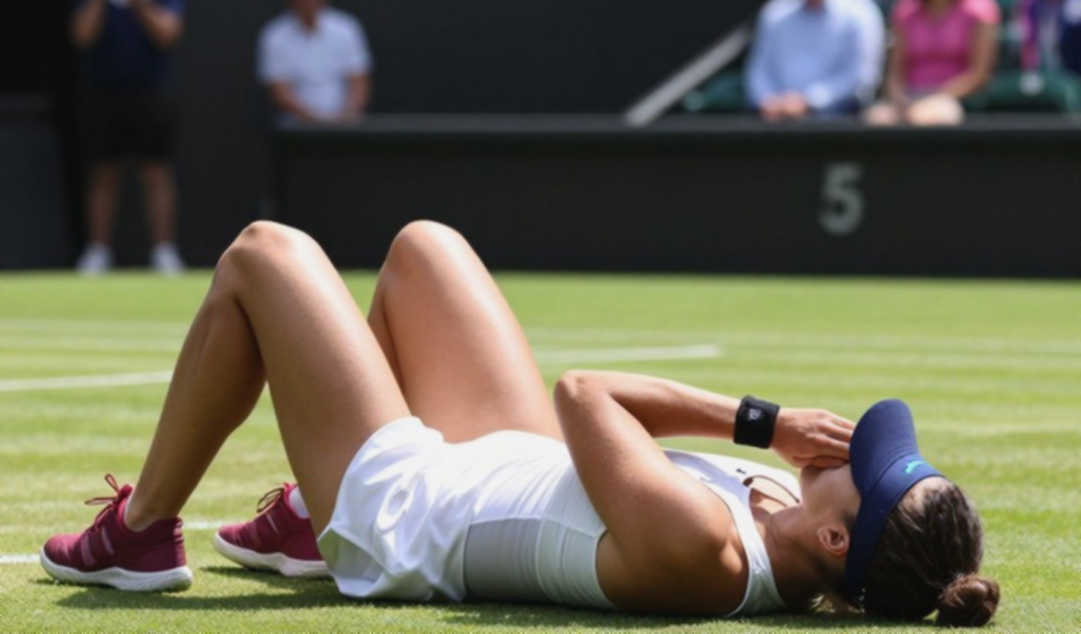
On 12 March 2026 the tennis calendar stopped. My retainer was cut by 40 per cent and Pakistan's Davis Cup tie was postponed twice. I did not argue about money; I asked the outlet to keep the Islamabad stringer's accreditation. Over the following ninety-two days I called sixty people: the Davis Cup captain, the team physio, the Lahore racket stringer, four ball kids from the 2026 tie. Ninety-two days of phone calls, and the Islamabad stand stayed empty — that was not coincidence, it was a sequence of priorities. In October 2026 I covered a behind-closed-doors ITF M15 in Islamabad: gates locked, eleven people in the stands. The report carried sequence more than event — who should have been in row four and was not. In July 2026 I wrote the Tokyo tennis from a Lahore desk, two screens, no crowd noise. The empty seat has been a permanent fixture of my match reports ever since, and I learned to turn atmosphere from decoration into evidence.
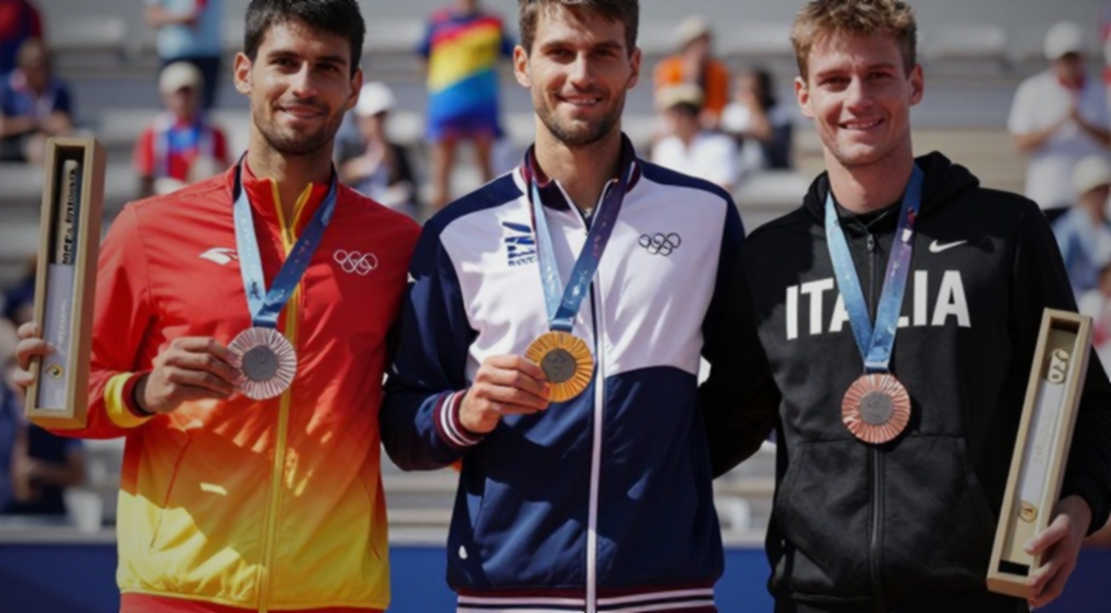
Now the part without which the argument is incomplete. On 27 January 2026, Rohan Bopanna, at 43, won the Australian Open men's doubles with Matthew Ebden and became the oldest first-time doubles world No. 1. I have known him since 2026, when he and Aisam-ul-Haq Qureshi became the first Indian-Pakistani pair to reach a Grand Slam men's doubles final at Flushing Meadows — lost in straight sets to Bob and Mike Bryan. In August 2026 I shared a budget hotel in Queens for fourteen days and filed eleven pieces in that fortnight. A month earlier I had watched Qureshi lose the Wimbledon mixed doubles final with Kveta Peschke. Eleven pieces in fourteen days, and the notebook kept the rhythm.
In those fourteen days I invented the two-notebook method: one for scorelines, one for what a player carries off court — the visa file, the taped ankle, the phone call home. Every match report since carries a forty-word 'carried detail'. Readers stopped writing to me about forehands and started writing about paperwork. That is my method and also my bias: I believe the truest story in sport begins with an entry list, not a forehand.
On 4 August 2026 in Paris, Novak Djokovic, at 37, finally took Olympic gold, with Bopanna in the same draw at his fourth Games. I put both results in one 3,000-word piece, an argument I have built since 2026 and reduced to a spreadsheet: every South Asian player's academy and Challenger pathway. The conclusion is plain. A late peak is not talent opening late; it is a pathway opening late. Not the home federation route, but a European academy and the Challenger circuit. Which is why I open every young-player interview with the same line: who paid for your first twelve months?
That question takes me to two places where I part company with the rest of the beat. First, junior tennis coaches chase results and erode the technical soil; the physical strength that wins under-18 titles eats the patience technique needs in adolescence, a pattern as visible in tennis as in under-18 football. Second, the young-player premium: tennis now prices expectation off junior ranking and two good weeks, when paying heavily for someone short of fifty tour-level matches is not investment but plain gambling. That is an old distrust of mine, and the numbers reinforce it annually.
Third, injury narratives. Return timelines in tennis are run by PR teams, not by medical reports. 'Week-to-week' usually means the injury is not close to healed — only close to a communications plan. I hold more than 300 recorded interview tapes; in many, the physio says what never reaches a press release. I do not name the physio. I do give the date. No press statement survives a date.
Here is where outsiders get it wrong. They see an empty analysis sheet and conclude there is no story. Wrong. When nine analysis boxes are blank, it does not mean nothing happened in the world; it means the document of what happened has not yet been filed. The deepest flaw in tennis coverage is mistaking a documentary gap for a vacancy and writing an evaluation into it. The second outside reading, repeated every year, is that a title won at 43 is 'a celebration of tennis life'. It is not a celebration; it is an indictment of the system. In a sport where a player must wait until 43 for a first doubles No. 1 ranking, nobody got an early pathway. The third: writing the last Chennai Open in the key of sentimental farewell. Tournaments die by calendar and licence, not by announcement. Twenty-one editions, then Pune, then silence after 2026 — and inside that silence a Challenger arrived in the same slot without anyone declaring a loss. Pakistan's own tour foothold vanished the same way. I do not write it in tears; I write a dated ledger: when the sanction lapsed, how far the accreditation list shrank, which sponsor stopped answering.
Beneath all this runs another structure that is not salaried. The stringer network, twelve accreditation clerks, four ball kids whose names appear differently in four different lists of mine. The specialist correspondent is now rare — Shekhar died in 2026, and the salaried tennis correspondent has thinned since. When the last person who keeps the notebook stops keeping it, what disappears is not the players' names but the dated sequence that shows how and when the game ended. I travel with the team, but the beat lives in the margins — and the margins are where the receipts survive.
One more habit, slow and non-negotiable: I assert nothing without a document. Event first, interpretation later. So when someone says 'Pakistani tennis is dying', I ask: on what date, by what announcement, from which accreditation list? That sentence, without a date, a number and a document, is exactly what my double-filing reflex exists to prevent. In this game everyone argues from memory rather than from counts, and memory changes the landscape, never the date.
I owe my own work an objection here. If ninety-two days of calls and eleven pieces in fourteen days never reach the page, the facts appear to have assembled themselves, and that is a lie. I state the method, the duration, then step back and let the finding stand. Claim the reporting, not the story. Which is why every report of mine carries a line on how many days I called, how many people I spoke to, and how many names could not be verified. The unverified names are still in the count.
And one survival habit rather than a professional one. Every airport receipt is a tiny match report from the road. A boarding pass shows when the physio travelled with the team and when he did not; a hotel bill shows whether a wild-card entrant arrived the day before or three days early; a stringer's invoice shows whether someone changed three rackets or eleven. These look trivial until kept in order. When a player says the preparation was complete, I check the date he reached the court — and it usually slows the press-release sentence down. A press box, if you listen long enough, is a kitchen table: more talk of food than of tactics, but dates fall there too. I pick them up.
So what is the answer to an empty analysis sheet? Extract entities. Names, tournaments, dates, scores, accreditation numbers. Then cross-check against official records — ATP and WTA profiles, tournament entry lists, the date of a sanction. Then the question no sheet asks: who paid for this player's first twelve months, and which federation entered him on which list? The answer is the story. Nine blank boxes are not the end of a story; they are the space where its address goes.
One question stays open, and I leave it open. Who holds the accreditation files of Chennai's twenty-one editions? Where is the eleven-person attendance record of that Islamabad ITF M15 filed? If Bopanna's road from a first ranking to No. 1 at 43 never reaches a spreadsheet, nobody will be able to rebuild it in twenty years. Tennis remembers its titles and forgets its accreditation lists. When the last notebook closes, the scoreboard will stand alone — and an alone scoreboard can never say who should have been in the row-four seat, or why they were not there.